Cold Weld Cast Iron Mig Trick
by Kevin the Welder
(Oregon)
For grey iron cracked casting repairs. Groove out the crack, or bevel the pieces if they are separate, like you would normally prep it for stick electrode cold welding with nickle type rods (NICL or NIFE). Now, Using a PURE NICKLE stick electrode (NICL) arc weld the root pass with the correct technique: Short, overlapping tacks with lots of peening immediately after each tack with a blunt tip chipping hammer. Allow cooling by moving around to different parts of the repair between tacks, if the casting starts getting hot, let it rest and cool. Warm is ok, but if its too hot to hold you hand on definitely allow it to cool. This is all standard procedure, cold welding of cast iron stuff. Get your good root pass with the PURE NICKLE type rod (or 97%, whatever its called) for the entire repair.
Now here's the trick part: Finish the cover pass up with the steel bare wire MIG welder. Use same technique as for nickle stick rods: short, overlapping beads, lots of peening immediately of each new deposit for stress relief. Start each steel bead on the nickle root pass and end it on the previous steel cover pass. Limit the heat input, allowing cooling time if needed. If you have rod stubs of the pure nickle rods hold them with needlenose pliers and feed them into the steel cover pass weld also. If you have any old junk (pure nickle) rods with the flux falling off them? Save them for times like this and knock off the flux with a hammer and feed the bare rod wire into the steel cover pass as you are laying it down with the Mig. Any added nickle is a bonus and it helps.
The finished deposit will be hard and non-machineable, just like it is with NIFE rod.
You have just saved about 1/2 of the cost of using your expensive nickle rod for the entire repair. Plus, it can go faster. You are not chipping and brushing out slag, just stress relief peening.
For small, light, cheap junk iron castings, such as a broke off cast iron skillet handle, or those cheap china garden benches, or ornamental iron castings? I've even used just the steel wire MIG by itself with pretty good results. Groove it or bevel your broken edges, and tack it all up lightly. Then finish up the welds out of a series of quick overlapping tacks. Each tack stress relieves the previous one. The cover pass has less and less carbon in it than the base iron casting because of all the layers. The quick tacks don't pick up much carbon. They fuse to the iron, but have limited mixing with it. It can work pretty well...
Return to Share a Welding Tip.

Would you like to get free welding videos in your inbox every week?

Tig FingersThe Real and Original TIG Finger® and XL model
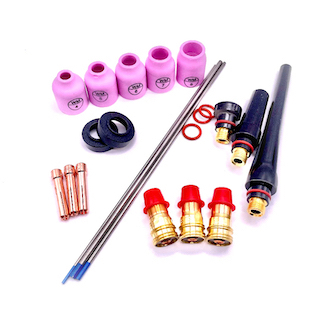
Stubby Gas Lens and Pro TIG kits
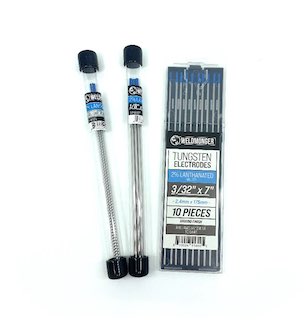
2% Lanthanated, CK LaYZr, Purple, more
Our Weldmonger Stubby Gas Lens kit is the Best