Welding Sheet metal Video - How to make an invisible weld

What is an invisible weld? Watch the welding sheet metal video and learn.
The term "invisible weld" is kind of misleading. In this welding sheet metal video, what is meant by invisible weld is a tig weld that is ground flat, planished with a dolly and auto body tool, and then fine sanded so that it looks like shiny bright metal and it is not obvious where the weld is. Being able to do this kind of weld is important for anyone doing auto body work or hot rod restoration.
The welder begins by doing something interesting that a lot of welders are not aware of...
He uses a small piece of copper sheet for backing.
Vise grip type sheet metal clamps are used to hold everything together and pulse tig is used to weld. You can count the pulses and its exactly 3pps or 3 pulses per second. Personally, I hate to weld with low frequency pulsing like this. It drives me nuts. I much prefer to set the pulse frequency to around 30 pps. That way my eyes do not have time to adjust between pulses. You still get the benefit of reduced heat input and agitation of the weld puddle without the eye strain and headache.
Anyway back to the part about the copper.
Sheet metal Copper backing does 2 things:
1. It draws heat out of the metal you are welding (if it is in close contact like with a chill block)
2. and it also traps argon in the weld puddle area. The back side of the weld on sheet metal gets hot and molten and needs shielding gas too.
Argon is actually absorbed into the molten metal, but gets squeezed out the back side upon solidification.
That small amount of argon on the back side of a sheet metal weld prevents excessive oxidation and allows the puddle to be a little bit cleaner and actually lets the puddle be more fluid because of less oxides floating around. If this welder had a thicker piece of copper like about ¼” thick, the weld would look even better. The good thing about using thin copper for backing for sheet metal joints is that you can form it to fit contours and can even tape in to the back side of a joint.
One caution….A little piece of copper like this one will get hot enough to burn you really quick. All the heat it absorbs from the weld is just waiting to make you holler if you pick it up too quick. So use copper backup for welding sheet metal.....but be careful.
exit this welding video page and see more welding videos
Would you like to get free welding videos in your inbox every week?

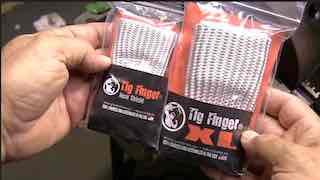
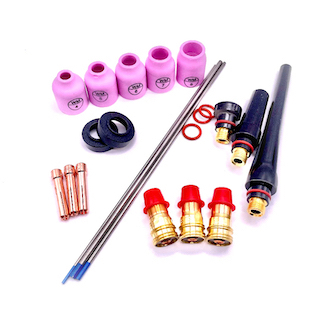
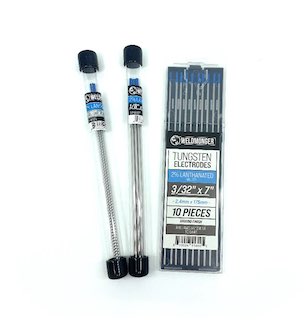
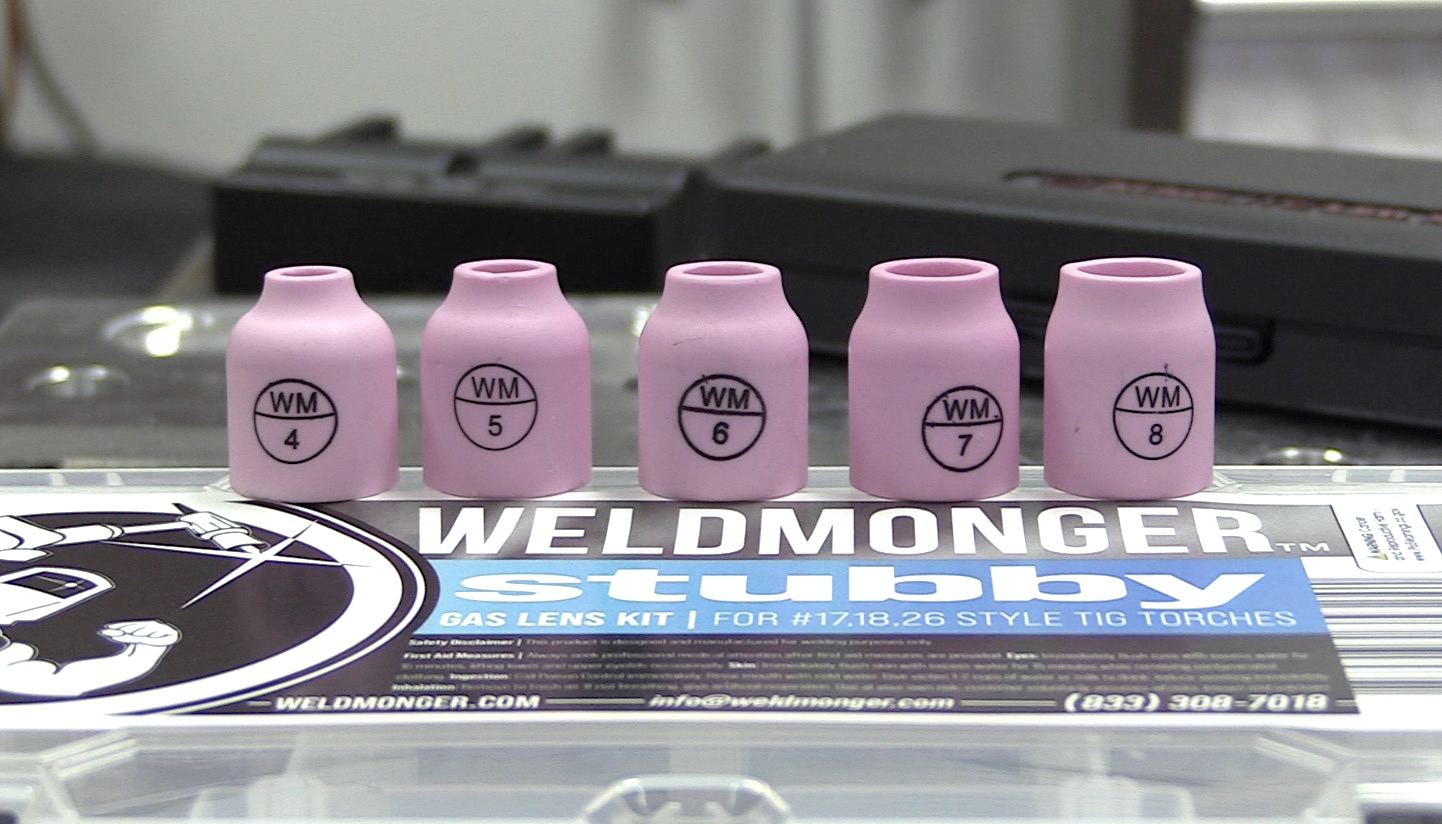
Tig FingersThe Real and Original TIG Finger® and XL model
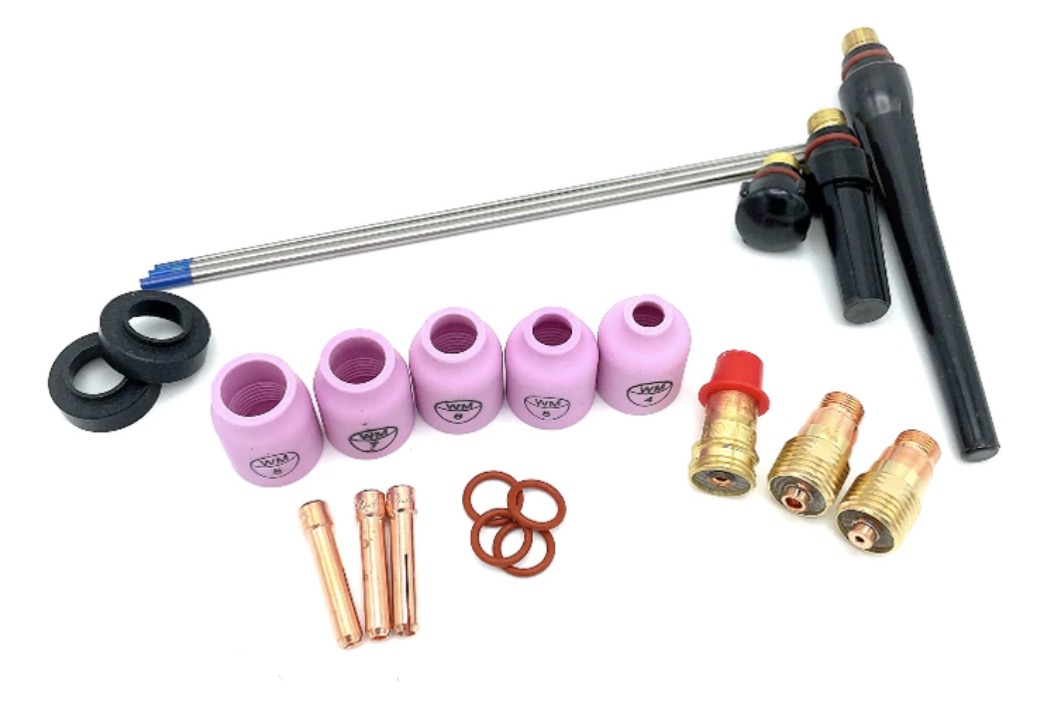
Stubby Gas Lens and Pro TIG kits
2% Lanthanated, CK LaYZr, Purple, more
Our Weldmonger Stubby Gas Lens kit is the Best
 Subscribe To This Site

