Cutting Torch & Oxy Fuel Welding Equipment Inspection Section 6
Inspect your Cutting torch and oxy fuel welding equipment before using.
Each operator has the right and responsibility to be safe in the workplace. It is each operator’s responsibility to give, at least a brief, inspection to the equipment that is to be used.
All components of the system should be checked before operation. "All components" refers to all equipment between the compressed gas source and the cutting torch/heating/welding tip.
The cutting torch oxy fuel welding equipment safety inspection checklist:
Compressed gas cylinders (oxygen acetylene tank and others)
Before use, have all cylinders been handled properly. Are there any physical signs of damage? Check valve assembly on each cylinder?
Inspect the chains or other device used to secure the acetylene oxygen tanks.
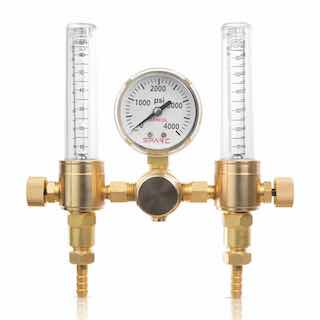
Attach regulators
Be sure that each regulator is correct for the cylinder it is to be attached to. Be sure that the regulator is designed for the pressure of the cylinder. Blow out the oxygen valve assembly before attaching the oxygen regulator, to eliminate the potential for a dust explosion. Inspect the regulator and cylinder valve for presence of any oils or grease. If present, DO NOT USE. Make sure the adjusting screw has not been damaged. Check the pressure relief port.
Cutting Torch or oxy acetylene torch
Inspect the torch. Are inlet connections unsatisfactory for threading a tight connection? Is there obvious physical damage on the torch? If using a combination torch, are the O-rings at the base of the cutting attachment in place and free of cracks? Is there any evidence of soot buildup on the torch body? Are the threads satisfactory on the head of the torch, to correctly tighten in the tip? If any of these conditions are present, DO NOT USE THE TORCH.
Safety devices
Safety devices normally consist of check valves and flashback arrestors. These devices will be placed at the outlet of the regulator or the inlet of the torch, or both.
note: flashback arrestors at both places could restrict the flow and starve the tip when using a rosebud tip.
Check valves may be used, flashback arrestors, or both. these days check valves are usually made right into flashback arrestors.
By definition, a check valve stops the reverse flow of gas. This prevents mixed gas in the system. A flashback arrestor stops flame.
Safety devices should be replaced periodically. A check valve contains a rubber diaphram that will stop the reverse flow of gas and operates at 2 psi. If a flashback has occurred, the check valve will be damaged, but will show no evidence of this. To check, remove the check valve and apply clean, dry, oil-free air pressure, in a reverse direction, of 2 psi. If air moves through the device, IT IS NOT WORKING, and should be removed from the system, and replaced.
A flashback arrestor contains a stainless steel screen. This screen will snuff out a fire, but will allow gases to flow through. There is a restrictive property to flashback arrestors, and regulator pressures need to be set to compensate for this. Refer to the manufacturer for the amount of compensation. Flashback arrestors, such as models available from Smith Equipment, may also contain a check valve, as in the case of the Smith Equipment device. If the flashback arrestor is torch mounted, there is potential for foreign material to enter the system and plug the device. This will further restrict gas flow and starve the tip. Like check valves, flashback arrestors need to be checked periodically. In similar fashion, remove the device, applying clean, dry, oil-free air pressure of at least 2 psi, in reverse flow through the device. If air goes through, IT IS NOT WORKING, and should be removed, and replaced.
Ready for Section 7 ? see links below
• MAIN PAGE ON CUTTING TORCH OXY FUEL SAFETY
• SECTION 1. Understanding the fundamentals of combustion
• SECTION 2. Proper handling of compressed gas cylinders.
• SECTION 3. Oxy-Fuel gas characteristics
• SECTION 4. The burning process
• SECTION 5. Proper operation of oxy-fuel heating tips
• SECTION 6. Oxy-fuel Equipment inspection
• SECTION 7. Oxy fuel Safety torch - tips




The Real and Original TIG Finger® and XL model
 Subscribe To This Site

