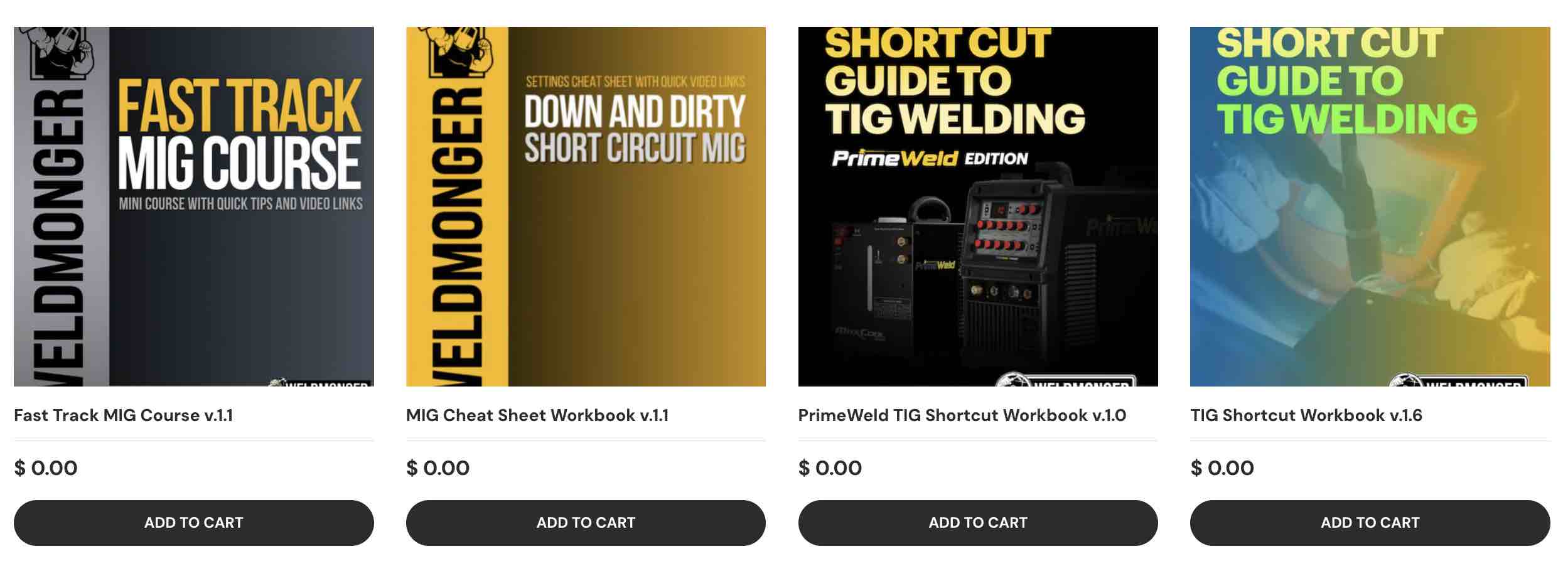
Take advantage of our Free Welding Guides loaded with Video links
MIG TIG and Stick Welding Videos

MIG Welding Videos & MIG Basics
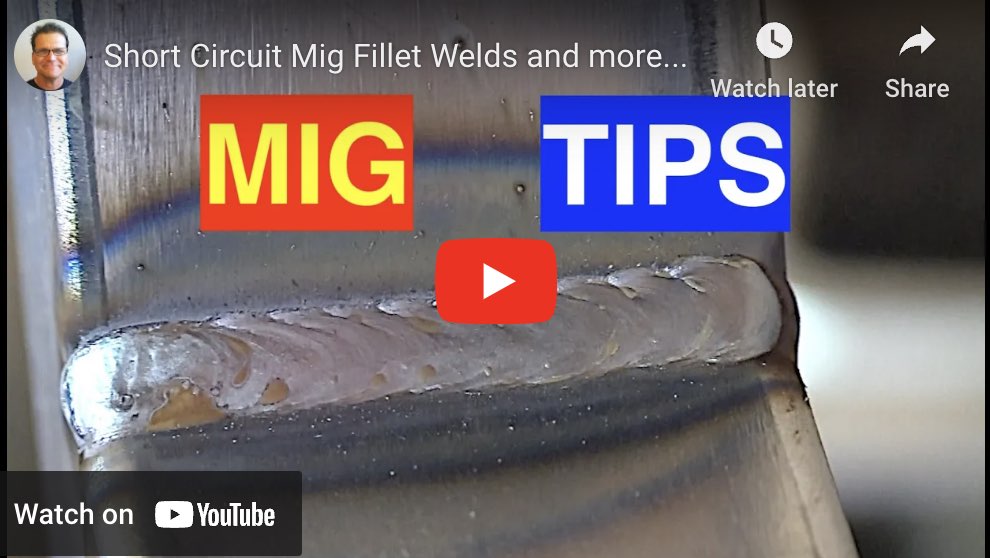
Take advantage of our Free Welding Guides loaded with Video links
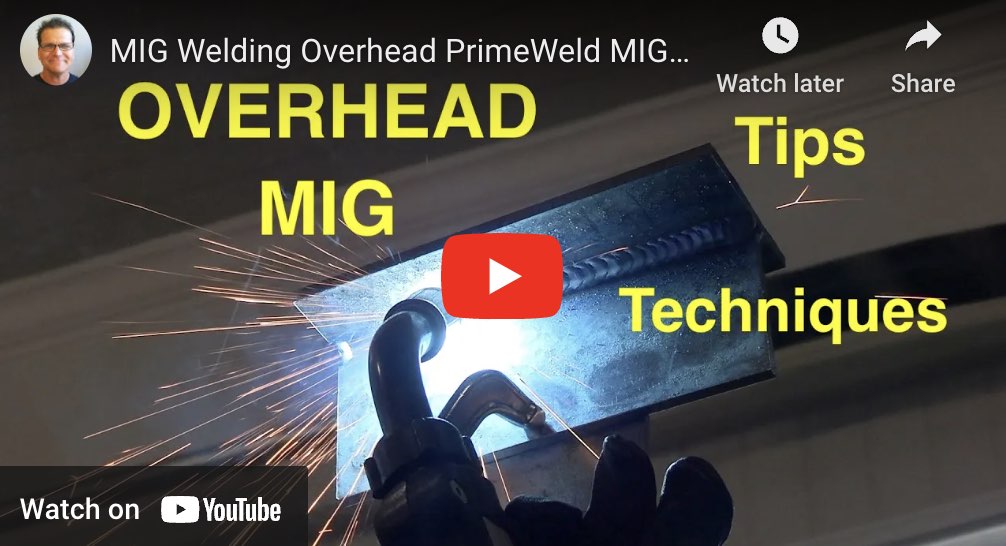
MIG Welding Overhead can be Easy if you follow these Simple tips
Take advantage of our Free Welding Guides loaded with Video links
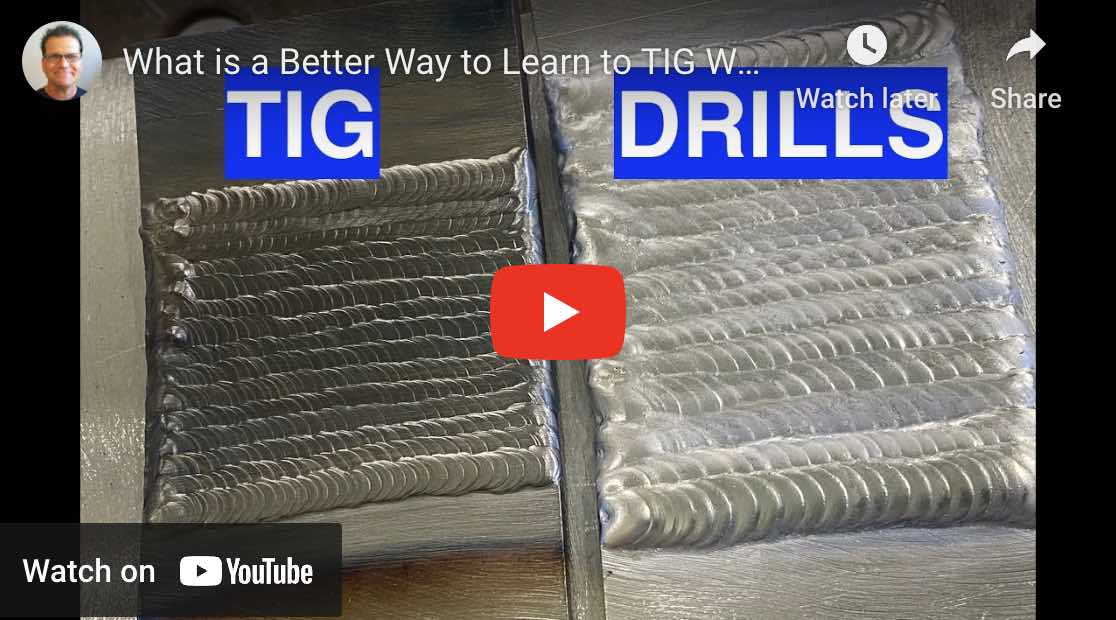
Think Outside the Box with a Better way to learn TIG
7 Tips for TIG Welding Aluminum or Maybe 8
Stick Welding Basics with 7018
Take advantage of our Free Welding Guides loaded with Video links
If you are serious about learning how to weld better, we have some excellent resources for you on mig tig and stick welding.
These Free welding guides are not some crappy AI slop.
I put all of these together myself and made sure to make them valuable with loads of practical info and links to videos that are organized in a way to help you learn to weld better quicker and with less frustration.
Take advantage of our Free Welding Guides loaded with Video links
TIG vs MIG vs Stick Welding — Basic Differences, Applications, and Pros & Cons
If you’re trying to understand the real differences between TIG, MIG, and Stick welding, don’t overcomplicate it. Each process has its lane. The key is knowing where each one shines—and where it doesn’t.
The Big Picture (Simple Breakdown)
- TIG (GTAW) = Precision, control, versatility
- MIG (GMAW) = Speed, productivity, ease of use
- Stick (SMAW) = Tough, reliable, field-ready
TIG Welding (GTAW)
What is TIG Welding?
TIG welding uses a non-consumable tungsten electrode to make the arc. You add filler metal separately (or not at all).
Why TIG stands out
TIG is the most versatile welding process. You can weld:
- Aluminum
- Stainless steel
- Carbon steel
- Titanium
- Magnesium
- Copper alloys
- Chromoly and other low alloys steels
- Tool steels
- Pot metal
All by simply:
- Switching filler metal
- Changing a few machine settings (AC/DC, amperage, etc.)
That’s a huge deal.
Common applications
- Aerospace work
- Food-grade stainless
- Aluminum fabrication
- Thin materials
- Precision work
Pros
- Cleanest welds
- Most control over the puddle
- Works on almost all metals
- Great for thin material
Cons
- Slow
- Requires different skill set
- Not ideal for production speed
- More setup involved
MIG Welding (GMAW)
Short Circuit MIG (Most Common)
Short Circuit MIG is a Wire-fed process where the wire is both the electrode and filler metal.
Where it’s used
Short circuit MIG is primarily used in shops for light to medium fabrication, like:
- General steel fab
- Automotive work
- Brackets, frames, and repair work
- Home shop welding
Pros
- Easier to learn for most beginners
- Fast
- Good for thin to medium thickness
- Works in all positions
Cons
- Not as clean as TIG
- Easy to run too cold (common beginner mistake)
- Limited penetration compared to spray
- Not ideal for thick material
Spray Transfer MIG is A hotter, higher-voltage version of MIG where molten droplets spray across the arc.
Where it’s used
Spray MIG is used for heavy fabrication and production, such as:
- Structural steel
- Thick plate welding
- Manufacturing environments
- High-deposition work
Pros
- High deposition rate (fast metal buildup)
- Deep penetration
- Very efficient for production
Cons
- Mostly flat and horizontal positions only
- Requires higher voltage and proper setup
- Not beginner-friendly
- More heat input
Stick Welding (SMAW)
Uses a flux-coated electrode (rod) that creates its own shielding gas.
Where it’s used
Stick welding is the go-to for:
- Maintenance and repair
- Field work
- Pipe welding
- Structural steel
It works where other processes struggle.
Pros
- Works outdoors (wind doesn’t kill your shielding)
- Simple, rugged equipment
- Great for dirty or rusty metal
- Deep penetration
Cons
- Slower than MIG
- More cleanup (slag)
- Takes practice to master out of position welding
- Not ideal for thin material
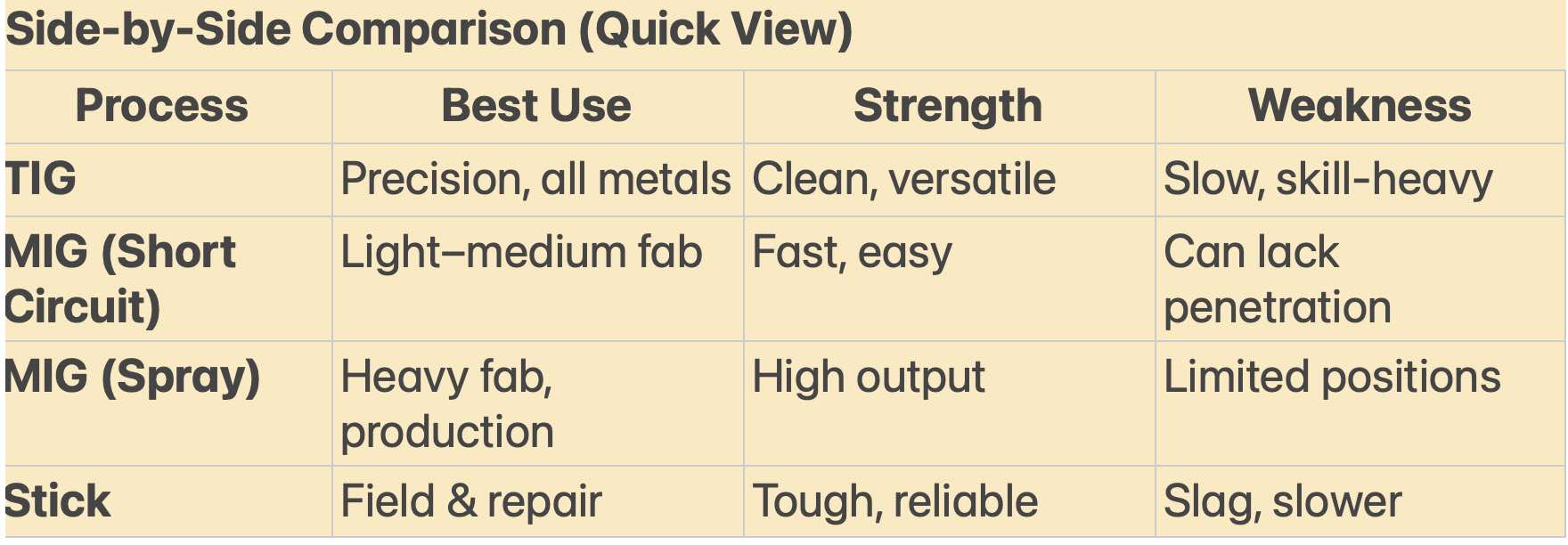
Summary
- Use TIG when quality, control, and versatility matter most
- Use short circuit MIG for everyday shop work and lighter fabrication
- Use spray MIG when you need production speed on thicker material
- Use Stick when you’re outside, dealing with rough conditions, or doing structural/pipe work
There are times when you are forced to use one process when another would be a better choice. Like when you run out of shielding gas for a MIG job and have to finish it with stick.
But If you fully understand the capabilities and shortcomings of each process, you will make better decisions.
Would you like to get free welding videos in your inbox every week?

Tig FingersThe Real and Original TIG Finger® and XL model
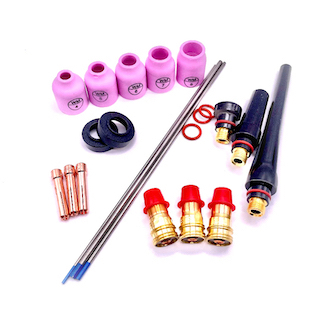
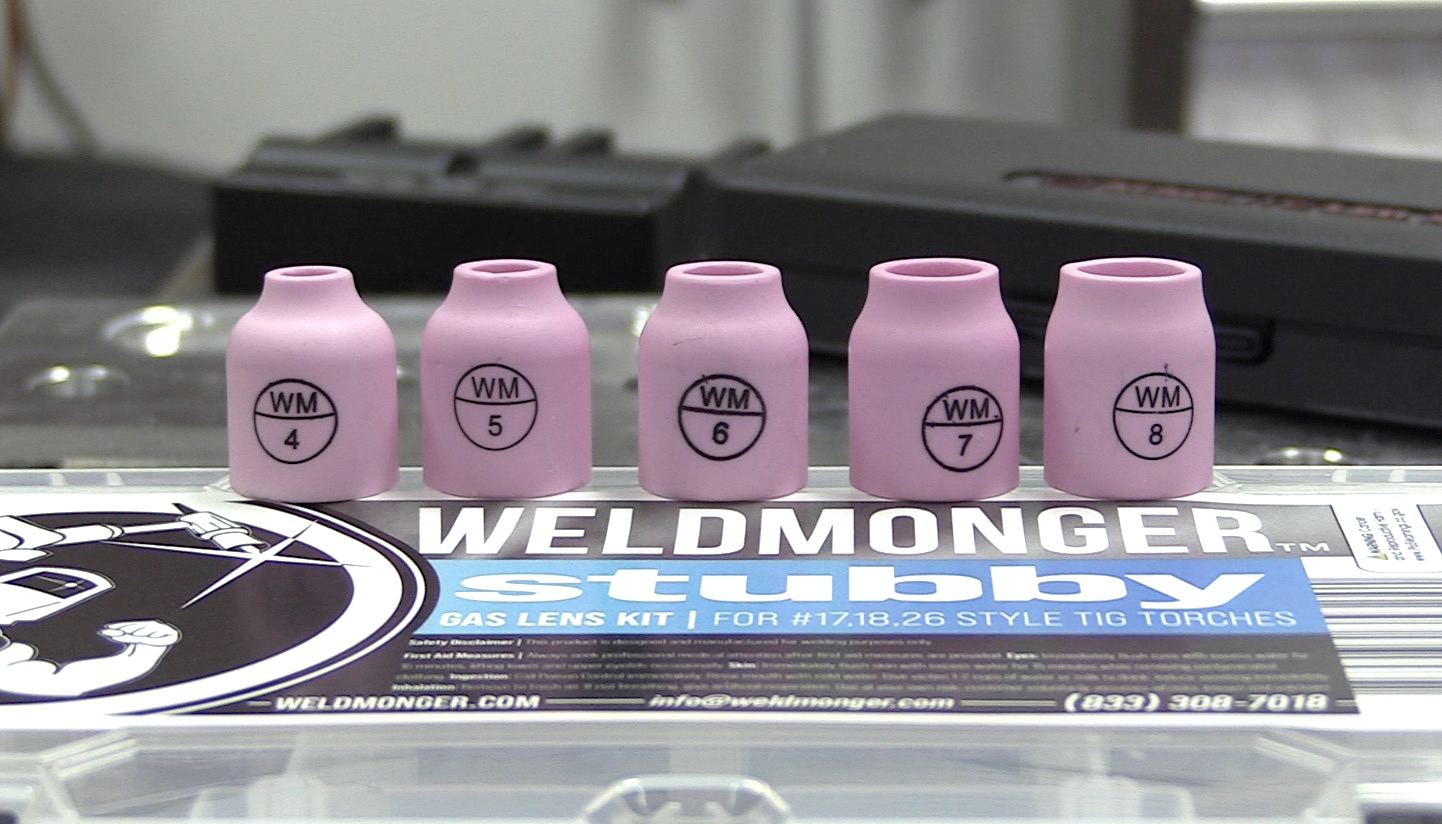
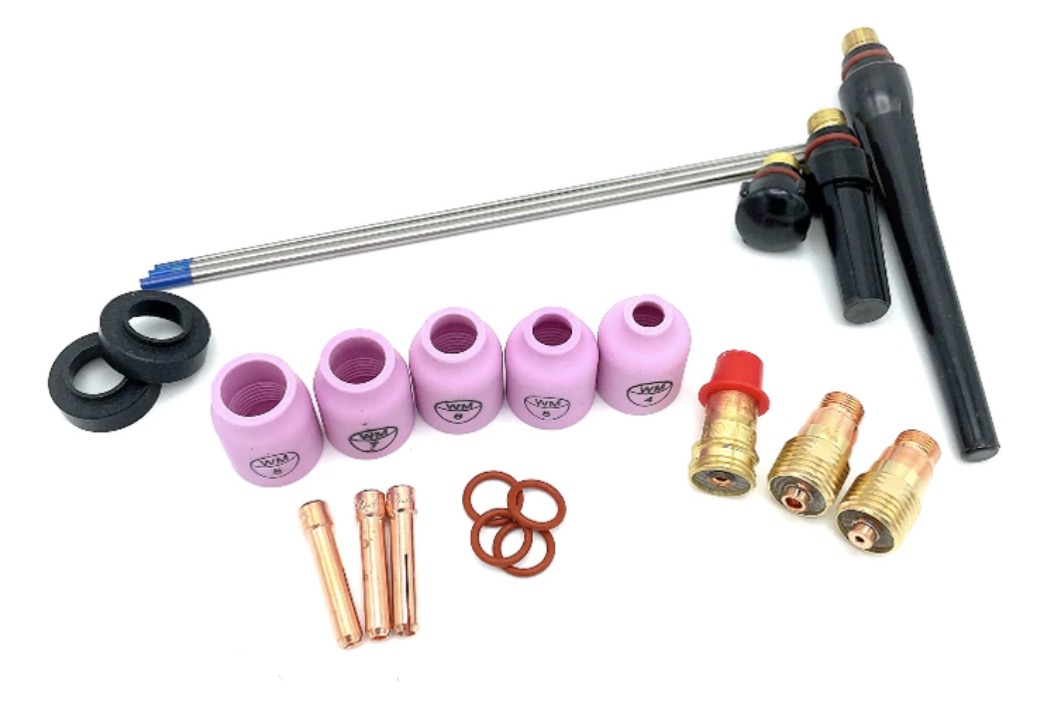
Stubby Gas Lens and Pro TIG kits
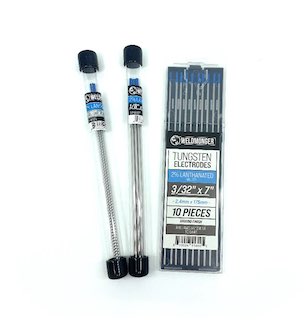
2% Lanthanated, CK LaYZr, Purple, more
Our Weldmonger Stubby Gas Lens kit is the Best