Take advantage of our Free Welding Guides loaded with Video links
TIG Welding for Beginners
Start Here...Watch the Video
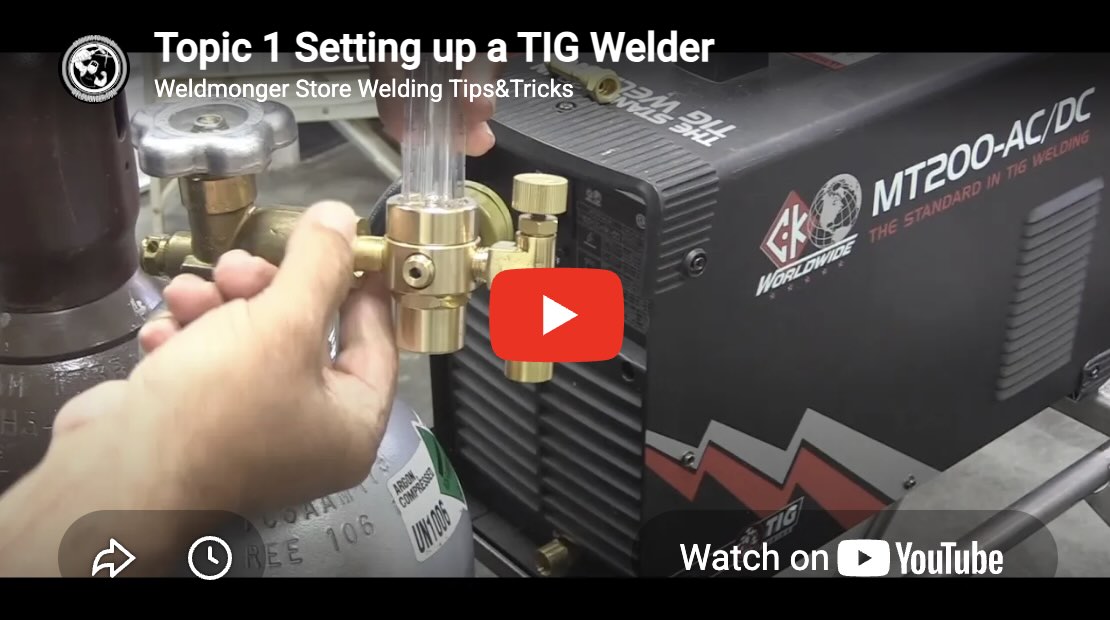
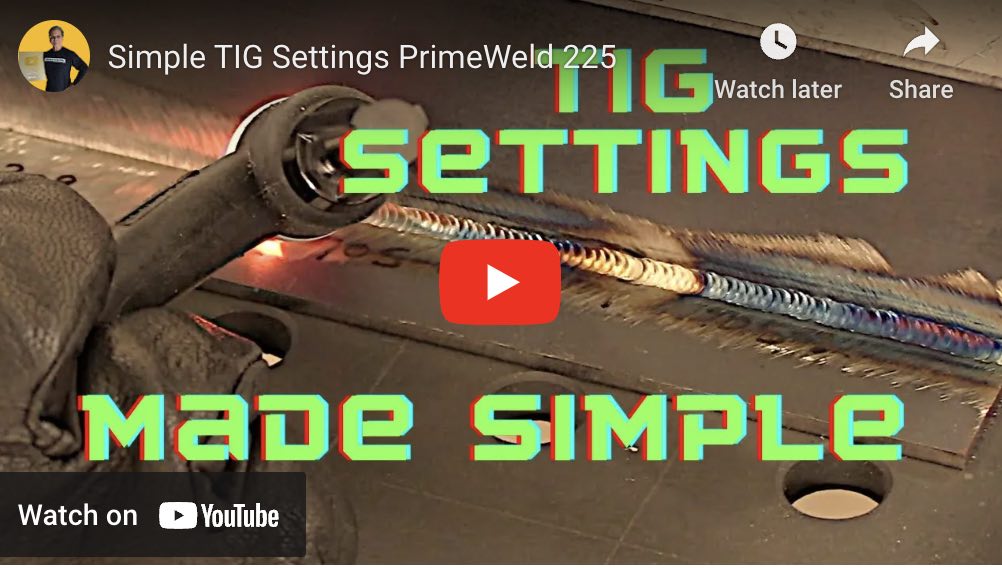

This is the first in a series of videos and articles titled TIG Welding for Beginners
Here is what you can expect to learn:
- TIG Welding Fundamentals
- What TIG welding machine to buy
- Power requirements ( and how that affects your decision on which TIG welder to buy)
- Which features you need and don't need.
- TIG torches
- TIG cups
- Tungsten electrode tips
- Shielding Gas
- Welding your first beads
TIG Welding Fundamentals
What TIG welding machine to buy
Miller? Lincoln? Esab? HTP? Everlast? PrimeWeld? CK MT200?
Think about this main thing…
If you purchase a new tig welding machine and have a problem with it, what is your expectation?
Would you expect a new machine delivered to door within a few days?
Would you feel comfortable talking to a service rep on the phone and taking the machine apart and poking around to try to fix it?
Would you be ok with paying for shipping to send it for repairs and being without your machine for 8 weeks?
How about hauling your machine in to the nearest authorized repair center?
Does that sound like a good day to you?
These questions all lead me to recommend these TIG welding machines.
The CK worldwide MT200 , Primeweld TIG 225.
The reasons are simple…
both machines perform well
Both companies typically send you a new machine if there is a problem.
Power requirements ( and how that affects your decision on which TIG welder to buy)
My first TIG welding machine was a Miller syncrowave 250….an awesome machine but it required a 100 amp breaker to get max amperage.
Who has an extra 100 amps in their garage anyway?
I had to do some bartering with an electrician friend to get a new breaker panel installed in my garage in order to weld aluminum over 1/4" thick.
I could weld thinner stuff with a 50 amp but anything over 200 amps and I kicked the 50 amp breaker.
So I wound up selling that syncrowave 250 and buying a dynasty 200 when they first came out to avoid that 100 amp breaker issue.
A 30 amp breaker handled the dynasty 200 and it never kicked off even at max amperage on AC.
My point is this…
Make sure you have the right power for the welder you buy.
Both the Primeweld TIG 225 and the CK mt200 are inverter tig welders.
I have used both with 30 amp breakers and have not popped a breaker yet on either.
But to get the absolute max amperage out of the primeweld, I think it would require a 50 amp breaker.
On 115 volt, I have used the CK mt200 to go all the way to 140 amps on DC without popping the 20 amp 115 volt circuit.
TIG Welder Features you need and dont need
There are numerous features on Tig welders.
Some are necessary and some are just nice to have.
AC Balance (Must Have)
AC Frequency (Must Have)
There are multiple waveforms for AC (nice to have)
Mix tig where DC and AC alternate back and forth (nice to have)
2t and 4t with upslope and downslope (nice to have)
Argon pre flow and post flow (Must Have)
Amplitude settings for AC current (nice to have)
Pulse settings (nice to have)
Of all these….
That said, I can get by without most of these fancy bells and whistles but…
AC balance and AC frequency are 2 features that I don’t like to do without.
Aluminum can be finicky...and having extra controls helps.
There are times when you weld brand new clean aluminum that just had a peel coating on it minutes before welding.
Then there are those jobs like boat props, marine hardware, pontoons, diesel tanks, hydraulic reservoirs , etc. where you need more cleaning action.
AC balance lets you adjust cleaning action according to the job.
Ac frequency is a bit less important to me than AC balance but is still a feature I like to have so that I can get the most out of the machine.
There are always exceptions but as a rule, I use lower Ac frequency settings for thicker aluminum and higher frequency settings for thinner aluminum and for edge build up.
TIG torches
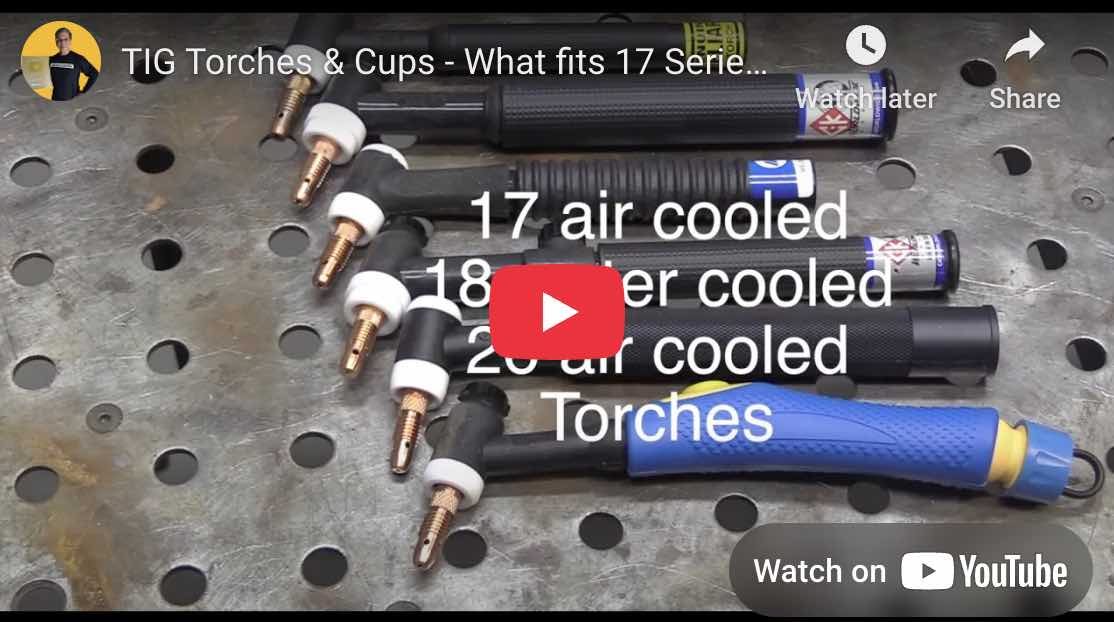
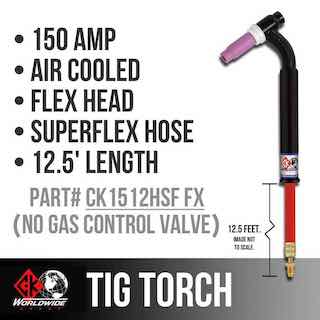
Both the CK mt200 and the Primeweld TIG 225 come with a CK worldwide air cooled 17 torch with flex head and super flex cable.
This is one of my favorite torches. Especially when upgraded with a weldmonger stubby gas lens kit.
I personally rarely use the standard 2 inch long cups and hardware that come with most 17 style torches.
Those cups are fine to learn with and work ok but I really like how the stubby gas lens kit shrinks the overall size of a 17 torch while also providing better overall results.
The stubby gas lens kit also works with all Furick cups both clear and ceramic ( except for the clear ally 5)
What about a water cooled tig torch?
It make sense for some folks to add a water cooled tig torch as well as tig cooler.
I really like the simplicity of a #17 style air cooled tig torch.
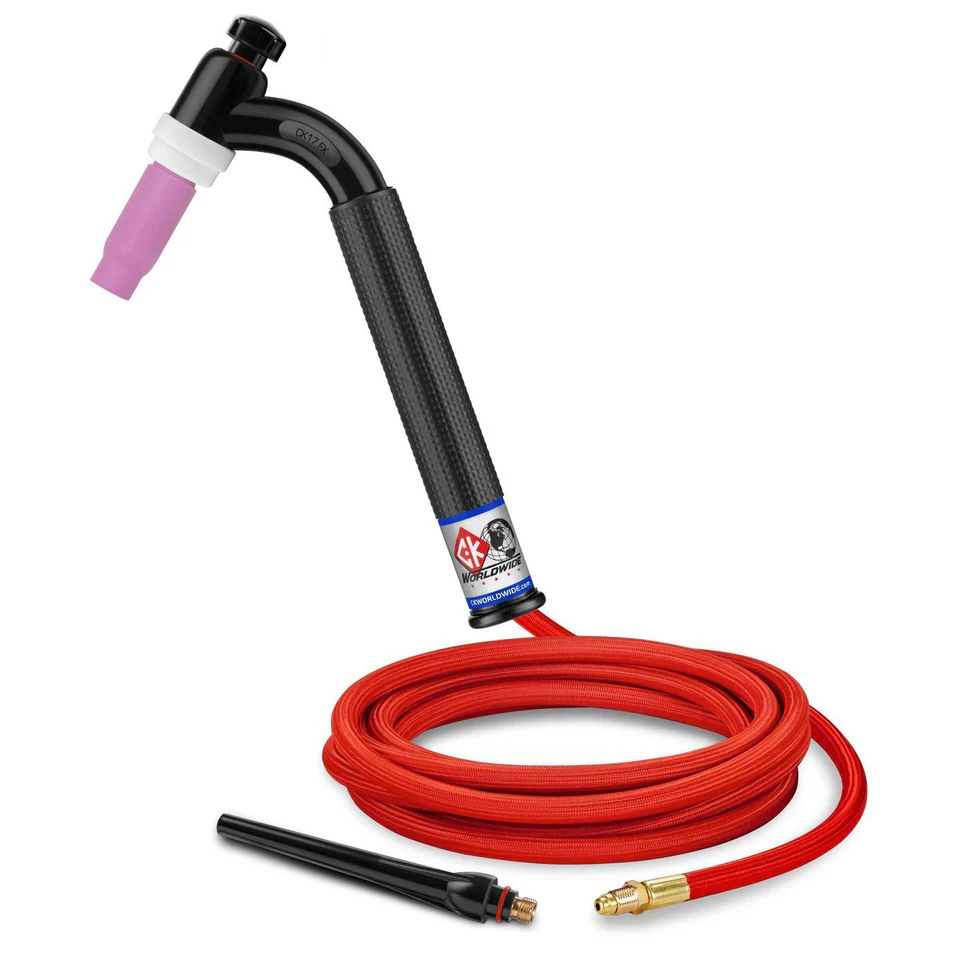
It’s simple and quiet and I use an air cooled setup a lot….partly because I know that is what most folks have.
That said, there have been times where I took jobs where I needed to weld 50-100 parts at over 200 amps.
That’s when a TIG cooler is nice to have so that you don’t waste time cooling off your tig torch.
A 17 style air cooled torch is rated for 150 amps.
You can definitely weld hotter than 150 for short periods but if you go too long, the torch gets too hot to hold.
With a tig cooler and 20 style water cooled torch, you can weld all day long at 200-250 amps without stopping….with a small torch.
I like a ck20 water cooled tig torch with super flex cables. These tig torches are available in 12 foot lengths as well as 25 foot.
The 25 foot cables are great for projects like an airplane fuselage, but all that extra cable can be unnecessary and lot to manage if you are always just welding at the bench.
Since the primeweld tig225 is a 225 amp machine it can really heat up a 17 air cooled torch if you push it at 200 amps for a while.
Fortunately, primeweld also has a very affordable tig cooler made to work with their machines.
The primeweld tig225 has an auxiliary power plug in the back that powers the tig cooler.
The benefit to that is that you can just leave the tig cooler on and when you turn the welder on it also turns the tig cooler on.
TIG cups
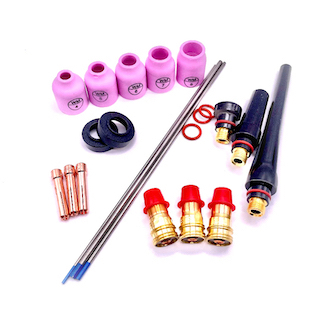
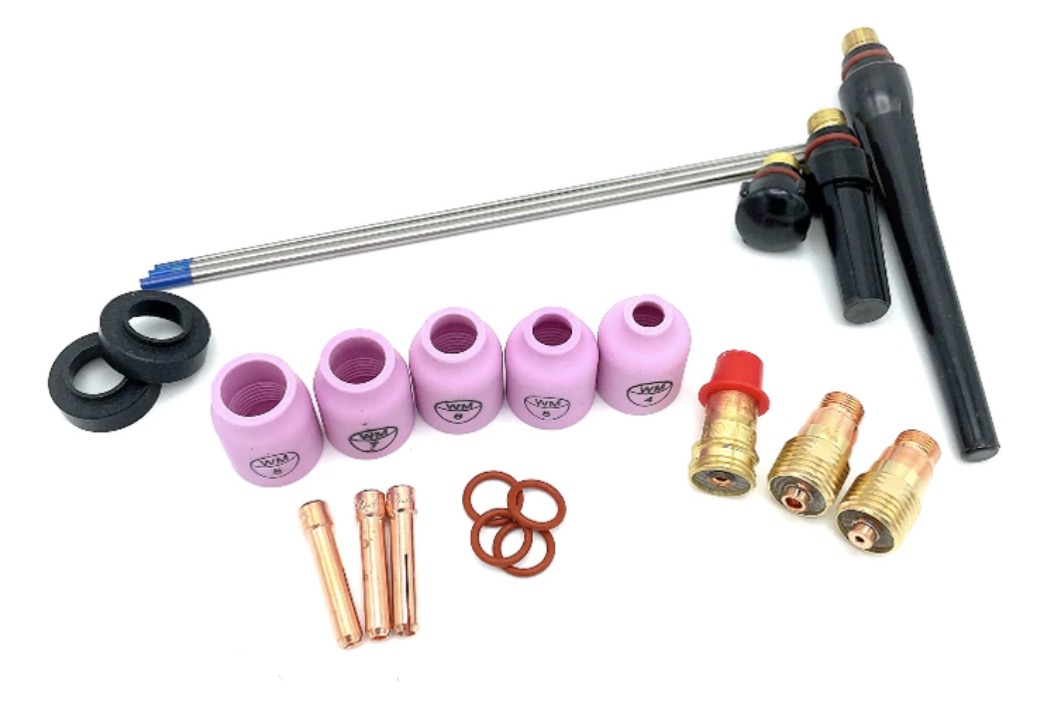
If you are still using the standard TIG cups and hardware that came with your machine or TIG torch, I can just about guarantee you will get better results if you upgrade to a weldmonger® stubby gas lens kit.
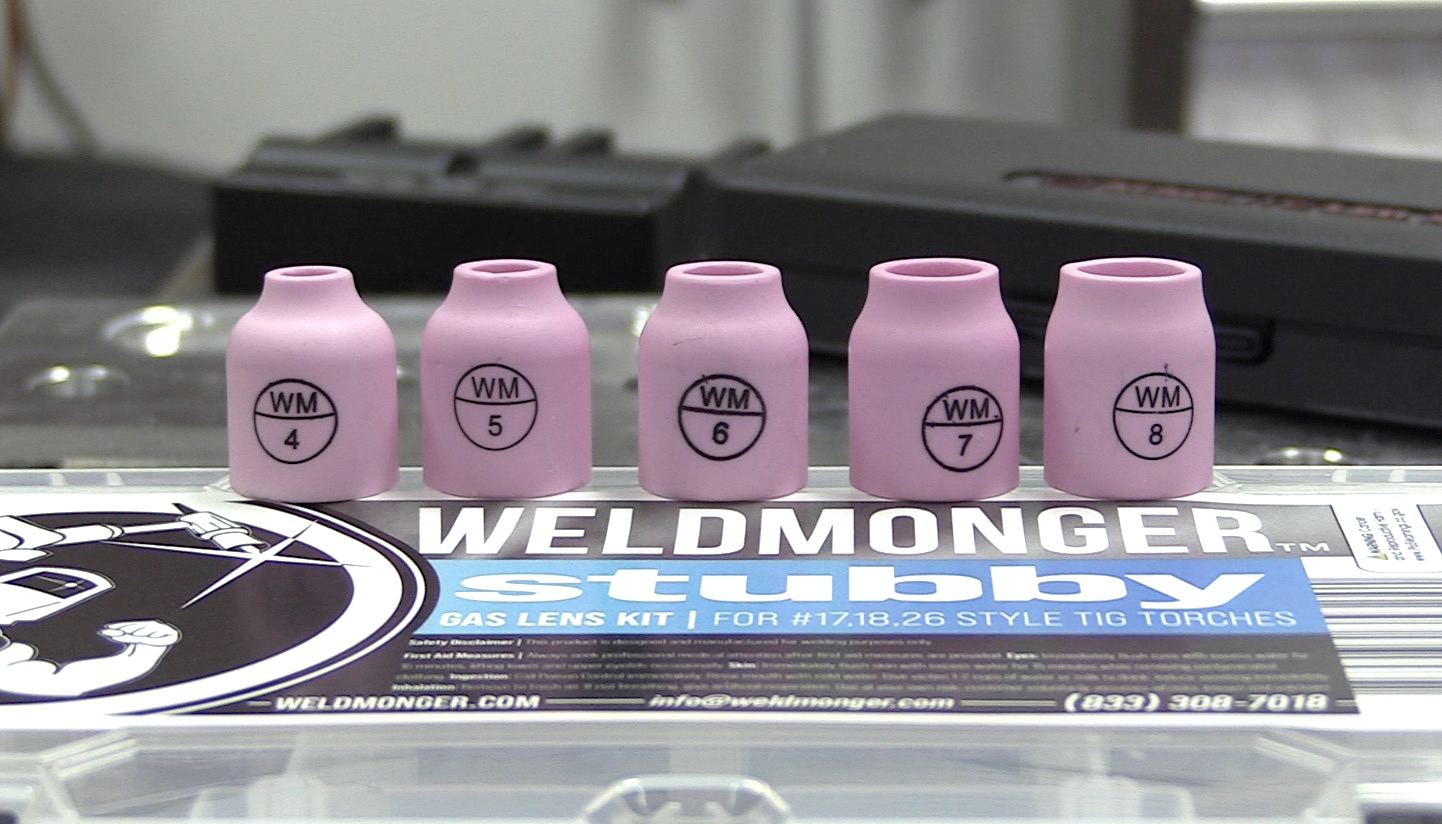
There are lots of options for what TIG cups you might need.
It can be confusing to any beginner.
Thats why we offer kits so that you can be sure all the cups work with your tig torch.
All you need to do is identify what style tig torch you have and that’s easy with the help of this video and these images.
One of the best plans is to get either the stubby gas lens kit for 17, 18, and 26 style torches ..
Or…the weldmonger gas lens kit for 9 and 20 style torches and add Furick cups as needed.
If you are already an intermediate or advanced welder, you might think about our challenger kit.
Or...if you want a kit that has most every cup you ever need all in one tackle box, then our TIG pro kit will take care of your needs all in one kit.
Again, all you need to do is identify what type of tig torch you have.
If you are purchasing either the primeweld tig225 or the ck mt200 welder, both come with the ck air cooled 17 so you already know the type torch.
Tungsten Electrodes
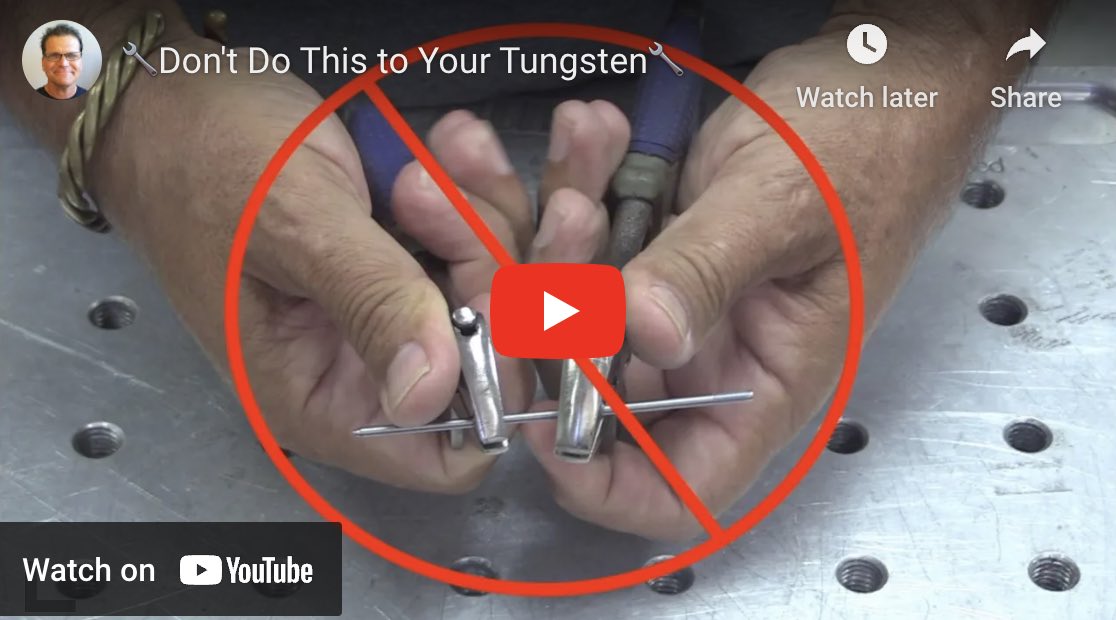
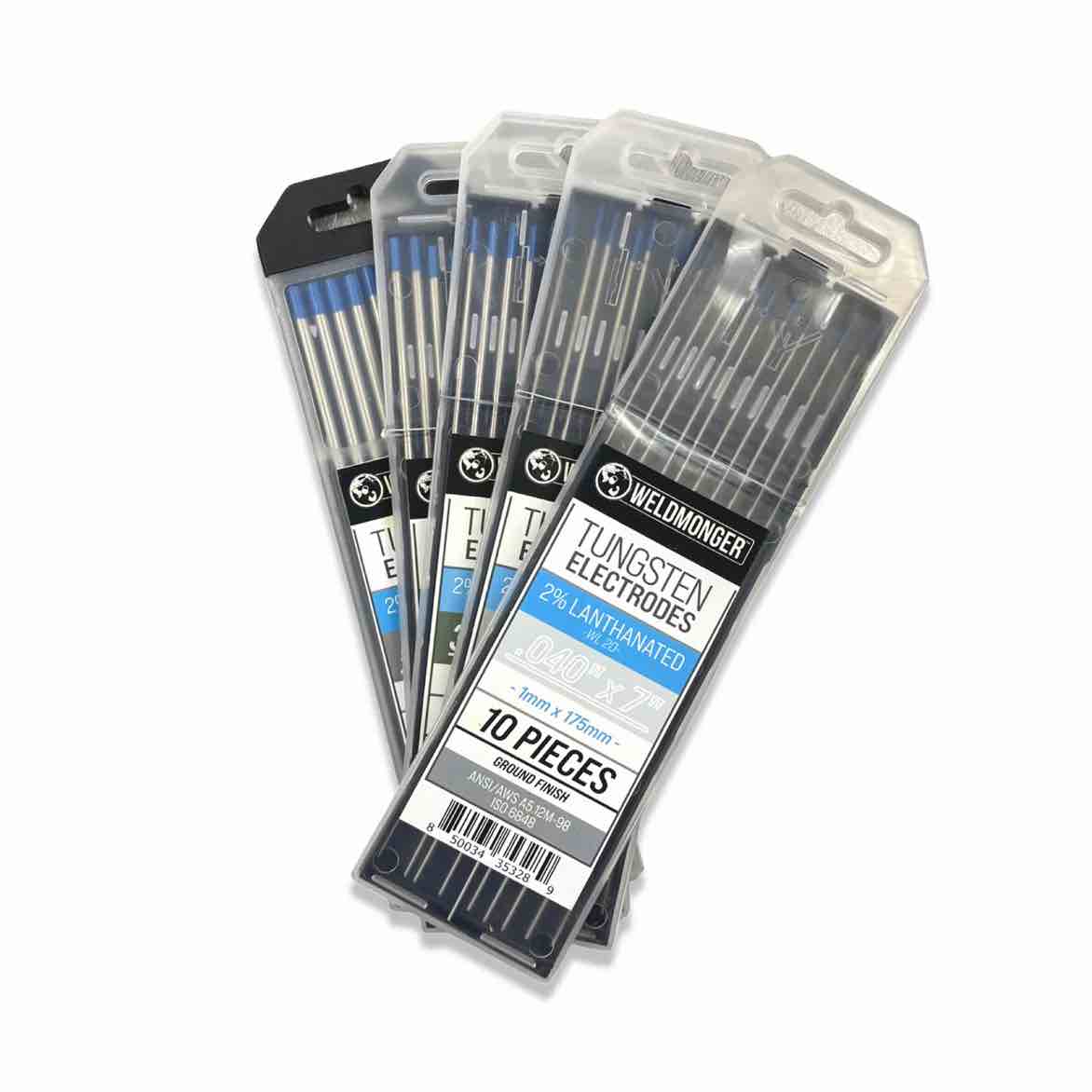
When starting out, you only need one type and sized tungsten electrode.
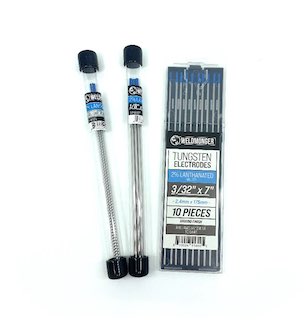
And that is 3/32” 2% lanthanated.
2% lanthanated is a great all purpose tungsten that works great for both AC and DC welding.
That means it works on all metals with no need to change tungsten.
Tungsten electrodes are color coded on one end and since you will often need to trim the tungsten to fit certain applications, you wind up with short pieces that do not have the color band on the end.
IF you stick with 2% lanthanated you will always know what type tungsten you have.
Later down the road, you might discover some very specific applications where other types of tungsten are slightly better but I personally use 2% lanth for everything.
A 3/32” diameter 2% lanthanated tungsten has an amperage range up to around 200 amps so it might be the only size you ever need.
Shielding Gas
Argon is by far the most versatile and most commonly used shielding gas for tig welding.
In the past, I have done videos where I showed the results of mixing a bit of helium in with the argon for tig welding aluminum.
Helium makes a big difference on aluminum but helium has become very expensive and hard to get.
Another option is a gas called STARGON AL from praxair.
Stick with pure argon when you are learning. It might be all you ever need.
To rent or own?
I own several cylinders of different type shielding gases.
For me, that makes sense since I need several types on hand for making videos.
Some folks prefer to rent and if you only need one or two cylinders, renting might make sense.
There are limitations on the size you can own and that is usually 125 cubic feet cylinders.
Helium can really supercharge your tig welder for tig welding aluminum.
Helium adds heat to the arc and can help a 200 amp tig welder weld almost like a 250 amp tig welder on aluminum.
that said, helium has become really expensive and hard to get.
Stargon AL is a specialty gas engineered specifically for tig welding aluminum.
Stargon AL also provides for a hotter and more efficient arc on aluminum.
It's not quite the same as mixing some helium with your argon, but its close...and its much cheaper than helium mixes.
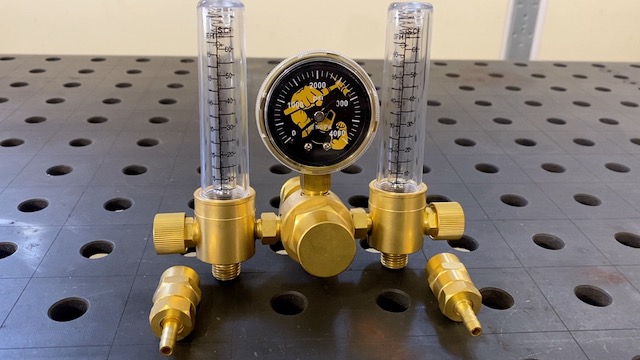
Regulator flowmeters
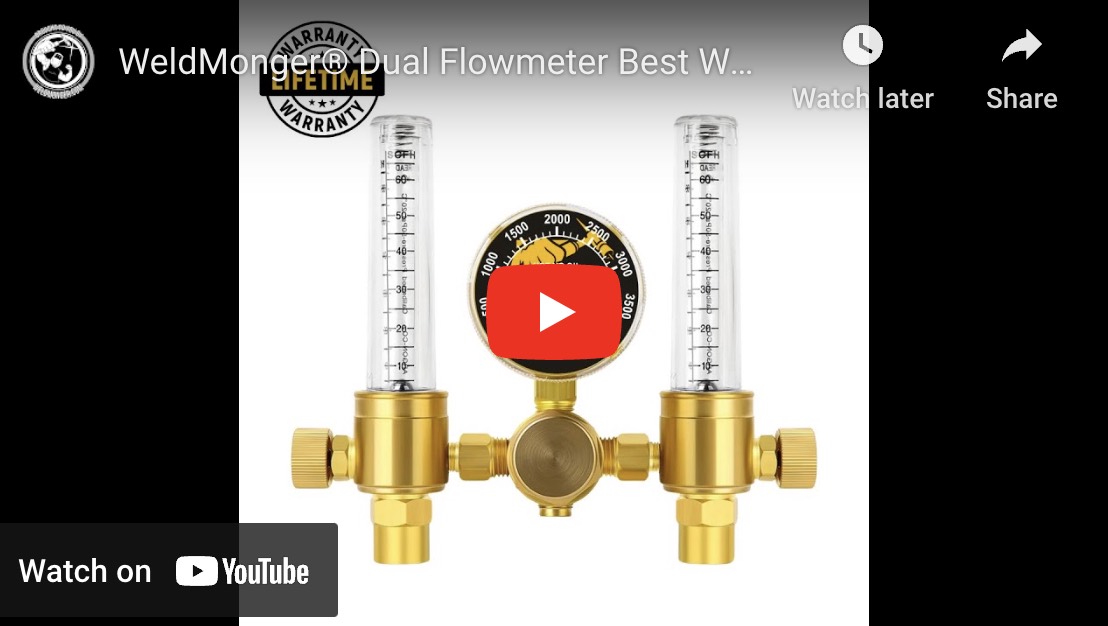
Most tig welding machines come with a simple single flowmeter.
I personally like the ball type as opposed to the dial.
And I also like to install a dual flowmeter for purging stainless steel, titanium and other alloys.
The single flowmeter is fine at first and if you have more than one cylinder of argon , you can use 2 separate flowmeters…one for purging if you need to later down the road.
Its good to have one of those pea shooter type flow testers too. To make sure the gas flow rate coming out of the end of the cup matches what the flowmeter reads.
Welding your first beads
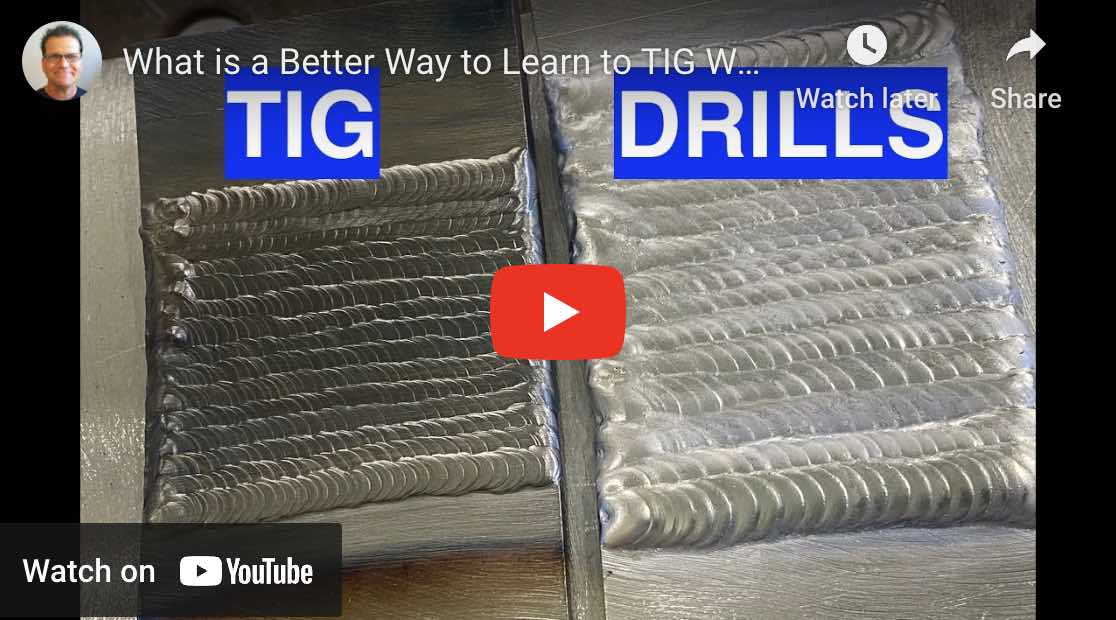
Download my free TIG workbook here
Would you like to get free welding videos in your inbox every week?

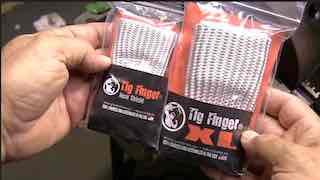
Tig FingersThe Real and Original TIG Finger® and XL model
Stubby Gas Lens and Pro TIG kits
2% Lanthanated, CK LaYZr, Purple, more
Our Weldmonger Stubby Gas Lens kit is the Best