Take advantage of our Free Welding Guides loaded with Video links
Aluminum TIG Basics 10-Step Plan

- HOME
- TIG WELDING ALUMINUM
- How to Tig Aluminum
- Aluminum Tig Basics
ONE PAGE HOW TO TIG WITH RULES OF THUMB
Best AC DC TIG Welder under $1000
10 Step Plan for TIG Welding Aluminum
Click on a Topic to jump to the section
- Make sure the aluminum is clean
- AC settings…especially AC balance
- Tungsten type, diameter, prep
- Cups & gas flow rates
- Amperage setting tips
- Arc length and torch angle
- Filler Rod timing
- Pedal control & torch amp control
- Practice drills
- Troubleshooting

What to look for in a TIG welder for aluminum
Clean your metal (if it needs cleaning).
Most welding textbooks state that you absolutely must clean all aluminum prior to welding.
This ideology simply does not match up with real world practice.
While I do agree that if aluminum is dirty, it should be cleaned using a method that is appropriate for the intended result.
But there are many situations that do not permit wire brush marks on the finished product and brand new clean aluminum does not require wire brushing or other cleaning anyway.
Aluminum should be clean prior to welding but that does not always mean it needs wire brushing, abrasives, or other type of cleaning.
Often a simple wipe down with a solvent like acetone is sufficient and sometimes that is not even required. It depends on the most wanted result. An aerospace weld test that will be X-ray tested has different requirements than a tread plate truck box.
AC Settings

The main 2 settings For TIG welding aluminum are
AC balance
AC frequency
Some tig welding machines have many more settings like waveforms but the main 2 settings that make the most difference are ac balance ad ac frequency.
The ac balance setting adjusts the level of cleaning action and should be set with enough cleaning to provide a clean puddle that is free from dots of oxides.
AC frequency is more of a preference setting but a good starting point for machines that have this setting is 60-100 hz.
Tungsten type, diameter, prep
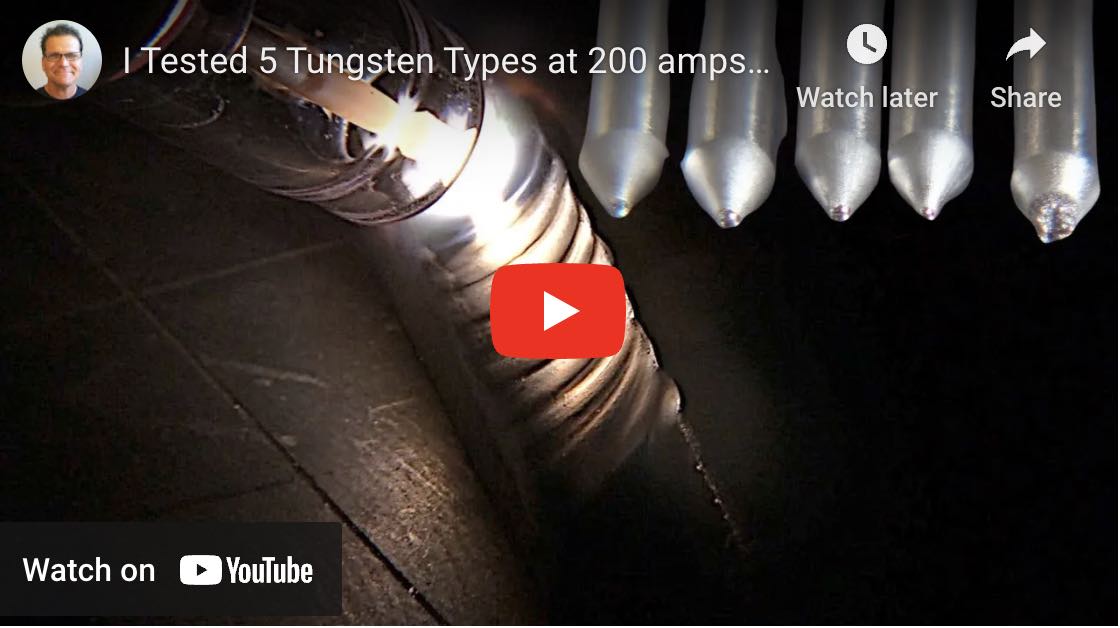
The best 3 choices of tungsten For TIG welding aluminum are 2% lanthanated (blue), CK LaYZr (chartreuse), and E3(purple).
A 3/32” diameter 2% lanthanated usually works well up to around 200 amps or 3/16” thick aluminum.
There are several ways to prep the tungsten tip For TIG welding aluminum but a blunt tapered tip usually works fine. If you find that the tip mis shapes at a certain amperage, you can round a freshly tapered tip a bit using a high cleaning setting on the ac balance or by switching polarity and rounding the tip on DCEP just a bit.
Cup & gas flow rates

There are a lot of opinions on what cup is best For TIG welding aluminum. Some people prefer standard collet body cups while others prefer gas lens cups. You can easily browse instagram and see awesome looking welds done with both collet body cups and gas lens cups.
However, I do recommend using a #5-8 size cup for aluminum.
The most common and versatile shielding gas For TIG welding is pure argon. For aluminum 1/8” and thicker, an argon helium mix or specialty gas like STARGON AL from praxair can be helpful.
Flow rates depend mostly on cup size and a good rule of thumb is 2 to 3 CFH per cup size. Using a factor of 2.5 CFH here is a down and dirty chart for argon flow rates for each cup size
Amperage setting Tips
Amperage For TIG welding aluminum depends on several factors like thickness of metal, joint type, chill factor, shielding gas used, and a few other factors. While there is no way to accurately list the amperage that will work on every situation a rule of thumb is 1.2 amps per one thousandths of thickness up to around .190” thickness. After that the rule starts to drift a bit. But when you are using a foot pedal, you might want to set the machine a bit higher and just control the amperage using the foot control.
Arc length and angle
Arc length and torch angle are two important variables For TIG welding in general but especially with aluminum. while a tight arc length helps, You may learn that lengthening the arc length while dabbing filler metal prevents contaminating the tungsten. The puddle tends to grow in height while you add filler rod on most welds and sometimes that causes the electrode to sputter in the puddle and get contaminated. A simple adjustment in technique can save you lots of time cleaning tungsten. torch angle should be limited to around 15-20degrees but torch angle can be very forgiving if arc length is good.
Filler Rod Feeding and Timing
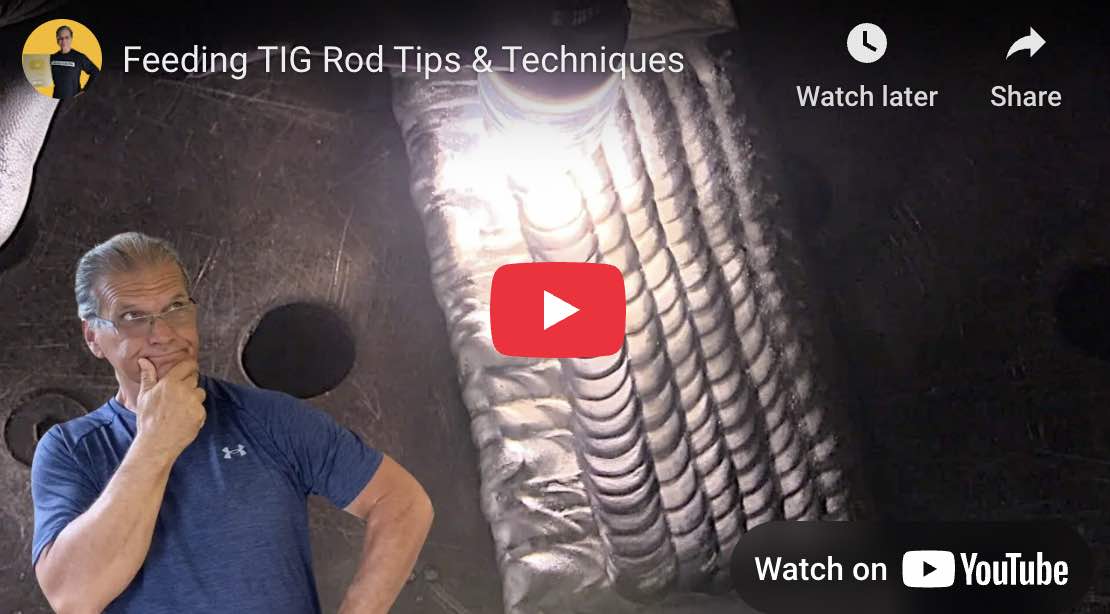
Addition of filler rod at the rightly timed intervals is how you get uniformity. when you are first learning you should strive to add the filler rod about once per second and you can easily count seconds in your mind. Thousand one…thousand two…thousand three.
As you get more seat time and become more proficient your travel speed will probably get faster in most cases but dont be in a hurry to increase travel speed while you are learning. Speed will come soon enough. Concentrate on uniformity before speed.
Most modern inverters have pulse capability. while pulse is not necessary for tig welding aluminum, a Pulse setting of 1 pulse per second with background of around 50% and pulse width of 50% can help you develop your filler metal timing.
Pedal control or torch amp control
In the USA, foot pedals are more common than other parts of the world. But torch mounted amperage controls have their place too and can be a help for certain situations like large projects where you have to kick the pedal around to make a bunch of tack welds. A torch mounted amperage control comes in handy for those situations. But for situations where you need the utmost precision and can not afford the slightest torch movement while adjusting amperage, a foot pedal rules.
Practice drills
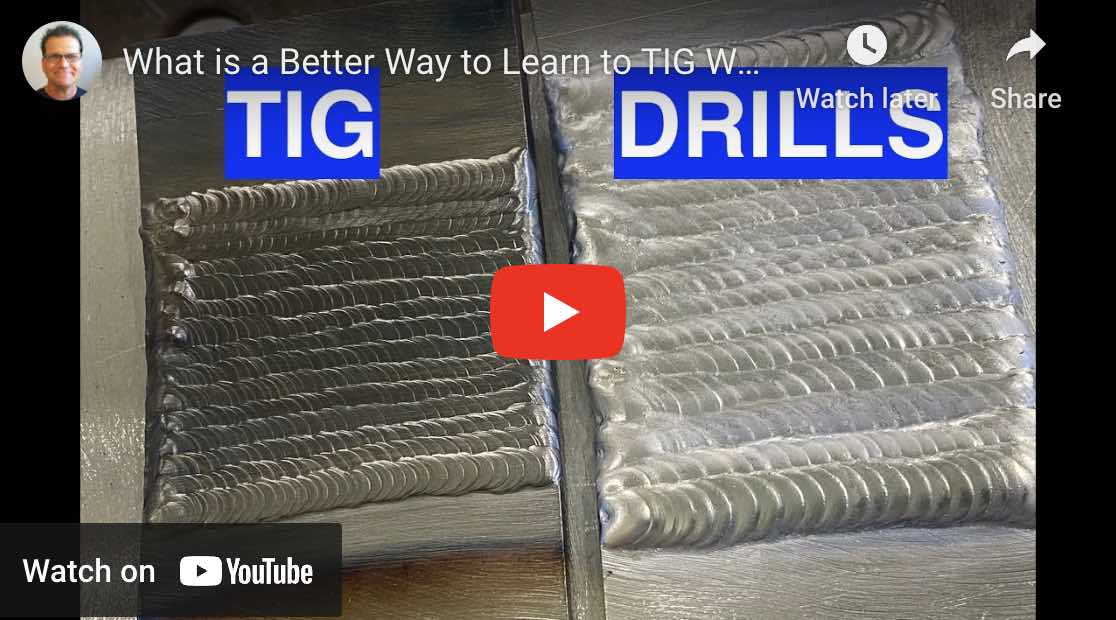
I am personally a big fan of practice drills. It makes no sense to try to weld lap joints, corner joints, and tee joints if you can’t weld a uniform bead yet.
The main practice drill I suggest is what I like to call the “aluminum drill” where you pad beads on a piece of aluminum that is around 1/8” thick.
It is the best and cheapest practice you can get and it even works better if you alternate welding beads on both aluminum and carbon steel.
The reason is because by alternating metals, the brain doesn’t get complacent and learning plateaus are avoided.
Troubleshooting
Troubleshooting requires a good understanding of process fundamentals along with the characteristics of aluminum.
Learning the fundamentals of tig welding aluminum will help you diagnose and troubleshoot problems.
- We know that all aluminum has an oxide layer and that it is electrically etched by the electrode positive part of the alternating current cycle.
- We call that electrical etching "cleaning action".
- We also know that the cleaning action tends to only go where there is argon shielding.
- We also know that aluminum needs to be clean before welding to prevent mixing in any contamination like coatings, oil, grease, paint, etc.
- We also know that an electrode that is contaminated with aluminum will not make a clean weld.
So when things start going wrong while tig welding aluminum,
- Make sure the metal is clean
- make sure the tungsten is clean
- Make sure argon flow rates are optimized for the cup used
- Make sure AC balance settings are correct with adequate cleaning.
Bonus Tips for Aluminum TIG
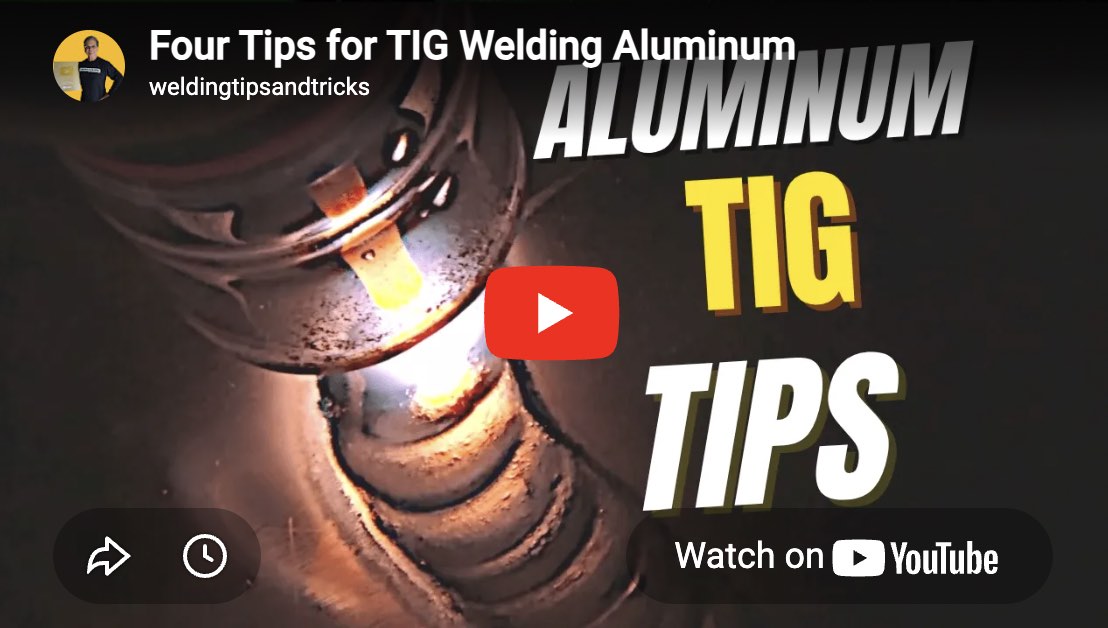
Would you like to get free welding videos in your inbox every week?

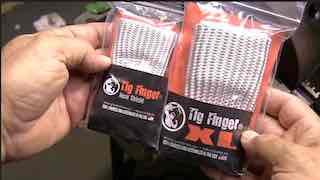
Tig FingersThe Real and Original TIG Finger® and XL model
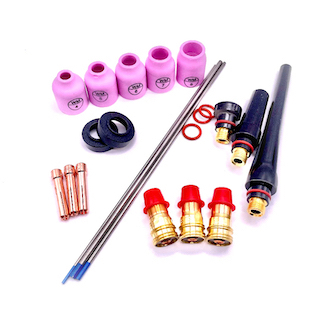
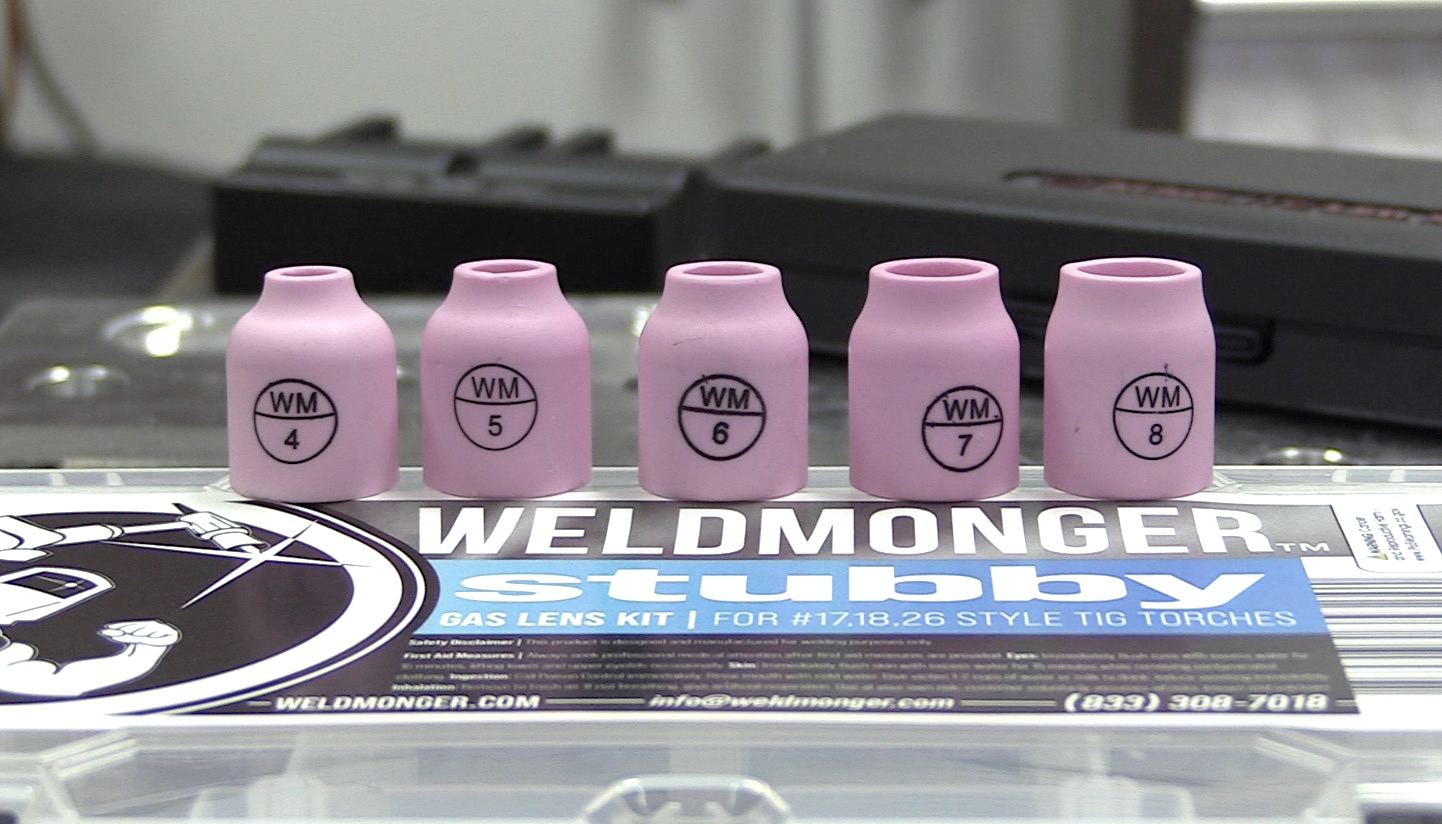
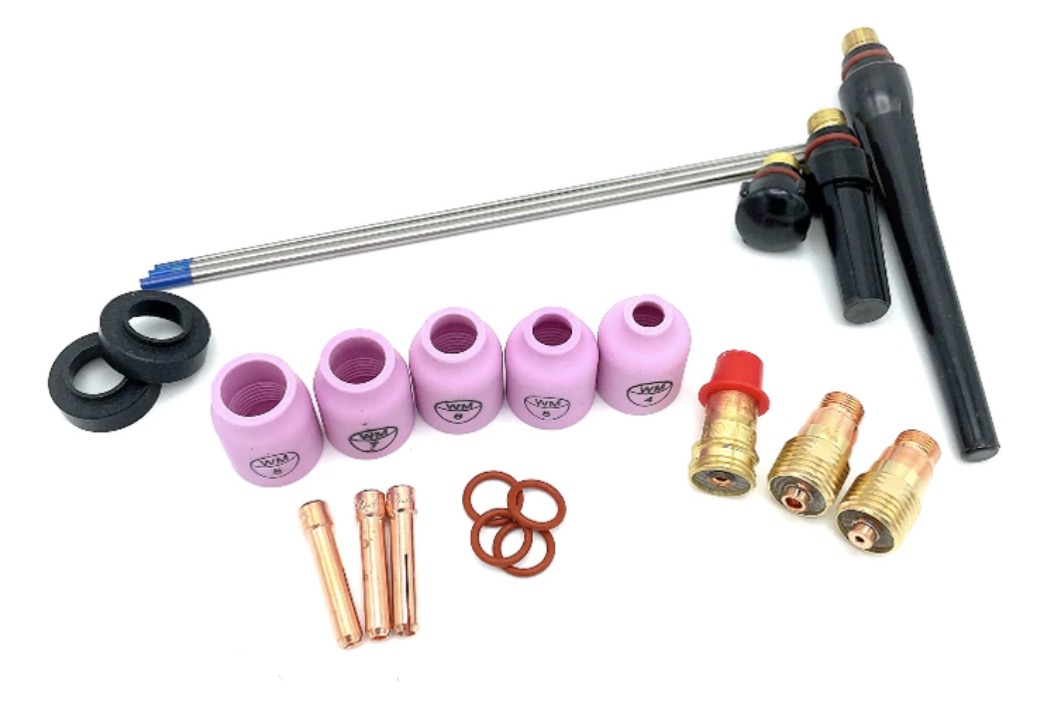
Stubby Gas Lens and Pro TIG kits
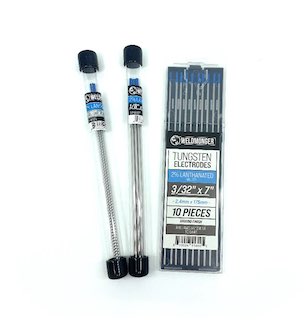
2% Lanthanated, CK LaYZr, Purple, more
Our Weldmonger Stubby Gas Lens kit is the Best