Welding Stainless Steel

"stainless steel takes about 1/3 less amperage than carbon steel!.. "

welding stainless steel 410

"keep that carbon steel brush in the toolbox!.. "

Before we get too deep into welding stainless steel, if you read my web page on Welding Steel , you may remember that plain carbon steel is basically Iron and Carbon with small amounts of other stuff like manganese. Low Carbon Steel has .3 percent carbon. Not 3 percent but 0.3 percent or point 3 percent. That’s not much. For comparison sake, Cast iron has a full 3 percent and sometimes more. That’s why cast iron is such a pain to weld and also why low carbon steel is the easiest metal to weld… low carbon steel is also the cheapest metal to buy. Low Carbon Steel is what we use to learn to weld and low Carbon steel is what we compare all other metals to when we study metals. Why? Well it’s easier to understand stuff if we can compare it to something we already know and understand.

Well now its time to compare something else to carbon steel. Let’s compare stainless steel. Stainless steel comes in several different varieties. Most welding “noobs” are not aware of this fact. The stainless properties of stainless steels are primarily due to the presence of chromium in quantities greater than roughly 12 weight percent. stainless steels contain some combination of iron, chromium, and nickel as the main elements. Most stainless steels are mostly iron. If your are familiar with the term 18-8 stainless that was widely used in the advertisement of stainless steel cookware, the 18-8 signifies 18 percent chromium and 8 percent nickel with the remainder iron.

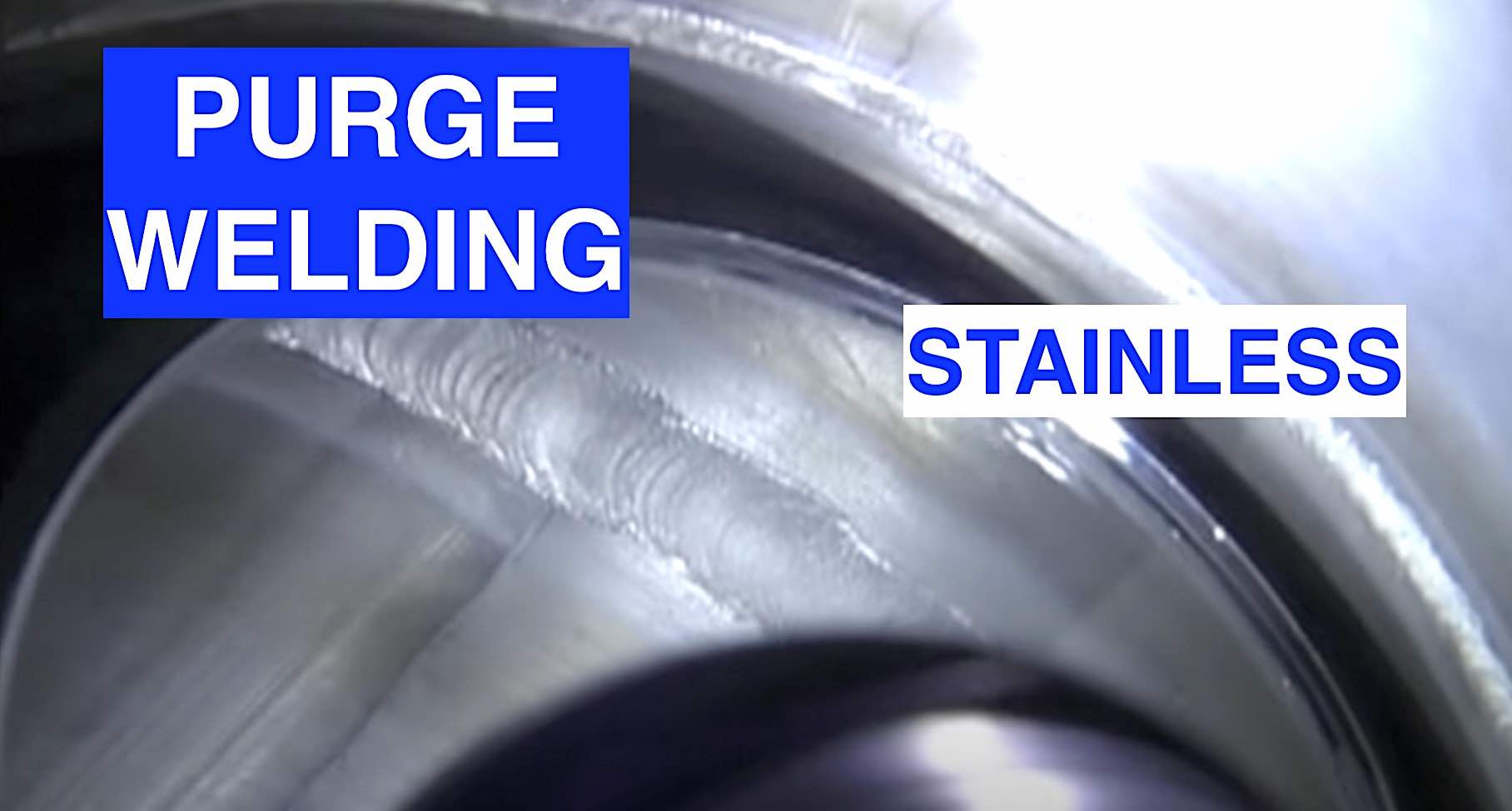
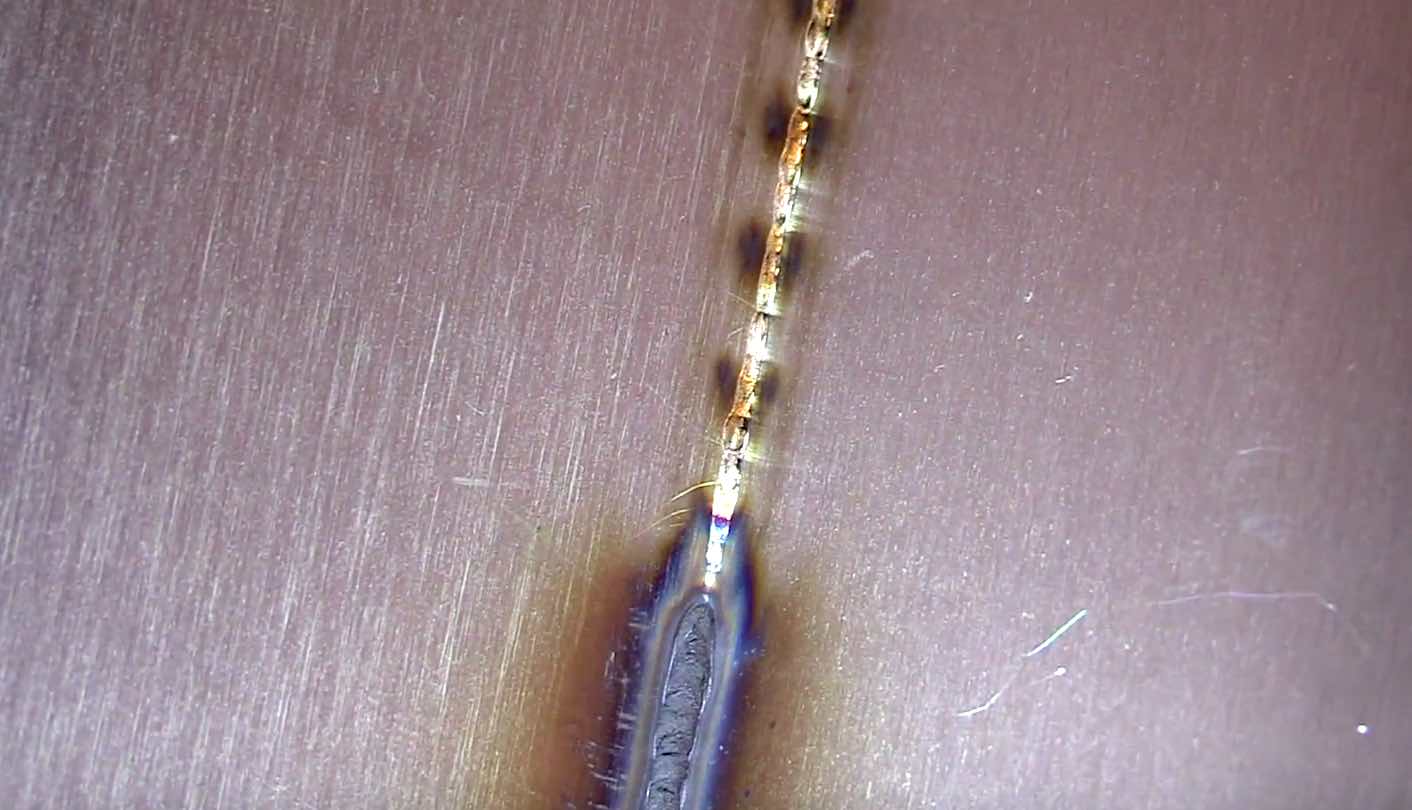
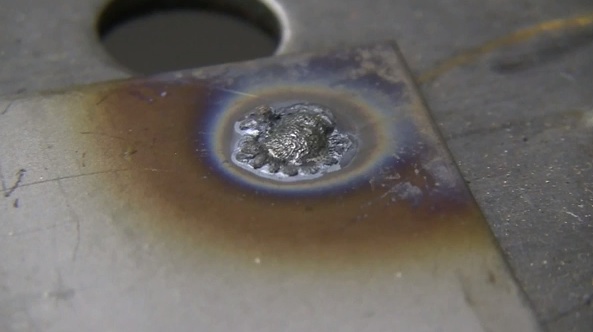
One thing I have to mention about welding stainless steel is that the back side of the weld needs argon shielding just as much as the front. The photo of the aircraft engine stator being prepared for welding displays special tooling made for the purpose of shielding the back side of the weld. If the penetration side is not shielded with argon, it will "sugar" which is a slang word for oxidize. Granulation is another descriptive term that accurately describes what happens. A closeup photo of the granulated or sugared stainless steel weld reveals why sugared welds fail in service. There are deep pits and crevices that are bound to develop into cracks.

"stainless loves argon!.. "
"iron particles on stainless + water = rust!.. "

More about Welding Stainless steel

A common misconception about stainless steels is that they are non magnetic. That’s because most stainless steel we see everyday is 18-8 and 300 series; Specifically 304 stainless. That is what the kitchen equipment at McDonalds is made of. The spoon you stirred your coffee with this morning was made from 300 series stainless. 304 stainless is non magnetic most of the time. If it is cold worked enough (cold worked means bent, hammered, rolled, smashed), it will become magnetic. stainless steels are generally classified as ferritic, martensitic, austenitic, or duplex (austenitic and ferritic). In addition, there are several precipitation-hardenable (PH) stainless steels like 17-7ph or 15-7ph . Precipitation-hardenable stainless steels have martensitic or austenitic microstructures and are generally considered more difficult to weld than the 300 series stainless steels.

Welding stainless steel Boiled down

But lets boil things down… you don’t really care about words like austenitic and martensitic do you?

Lets break it down even further and classify stainless steels into 2 groups. Hardenbale and non hardenable (by heat treatment). None of the 300 series stainless steels are hardenable by heat treatment. That means 304, 316, 321, and 347 stainless steels all are not hardenable so they fall into the non hardenable group.

301 is hardenable by cold working but not by heat treatment. In fact 301 sheet metal comes in ¼ hard, ½ hard, ¾ hard and full hard. (I know what you are thinking and just keep the sexual innuendos like “that’s what she said” to yourself).

Some 400 series like 410 stainless steels are definitely hardenable by heat treatment. 410 stainless contains about 12 percent chromium and no nickel. It is known as a straight chromium stainless. It is very magnetic and will rust. It is very weldable but needs to be stress relieved by heat treatment after welding for most applications. Several of the 400 series stainless steels harden by rapid cooling from a red hot temperature.

Ph or precipitation hardening stainless steels like 17-7, 15-7, 15-5, 13-8, a286 are all hardenable by heat treatment. They harden by being held at an elevated temperature for a long time. Heating them red hot and quenching does not have a hardening effect on ph stainless steels

Most common ways to weld stainless steel

stainless steel is most often welded with:

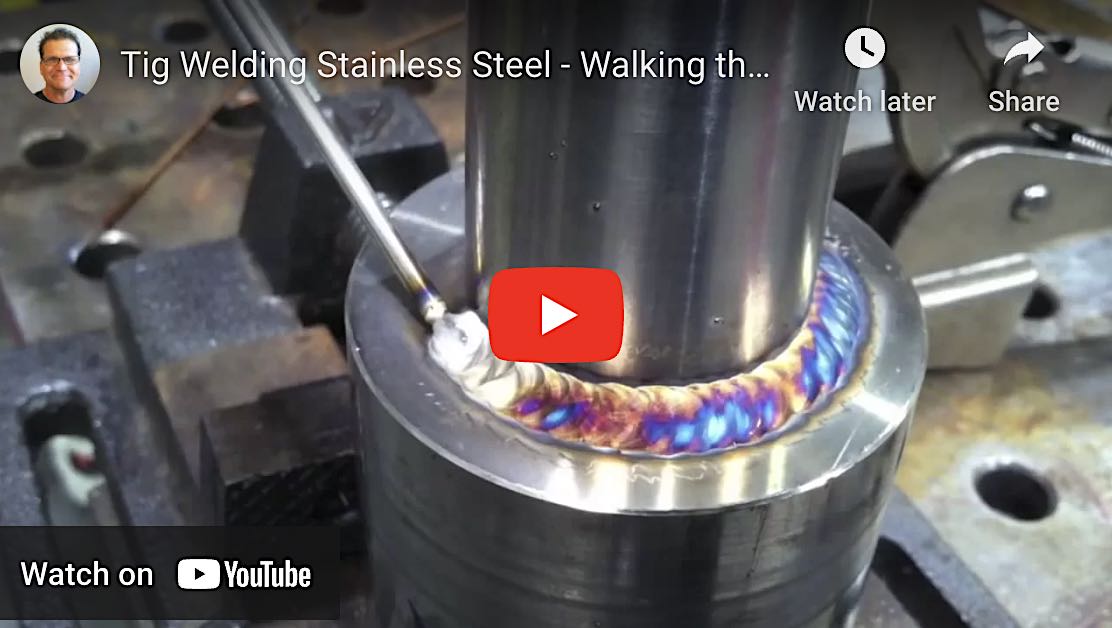
TIG welding, also called heliarc welding, also called GTAW, (gas tungsten arc welding)

Stick welding, also called arc welding, and also called SMAW, (shielded metal arc welding)

Mig welding, also called, wire welding, also called GMAW, (gas metal arc welding)

I am old school. I just call them Stick, Mig, and TIG.

Stick welding stainless steel is easy on the bench and in the flat position. But for out of position welds, it can be a pain in the butt. The worst scars I ever got on my arms came from stainless stick rod. It was a welding test and I was determined to pass. I just didn’t want to stop and make another tie in. Oh well, like the old man said: if you’re going to be dumb you had better be tough.

In the hands of a real stick welder, stick welding can produce some high quality stainless steel welds.

Mig welding stainless steels is used for fabrication, manufacturing, kitchen equipment. It is not as portable as stick welding and unless you are using flux cored self shielded wire, windy conditions matter a lot.

Changing from carbon steel to welding stainless steel is much more complicated than with stick welding because it usually involves changing shielding gas as well as the spool of wire. The good thing about mig is that it is quick and there is no slag to clean. It lends itself well for fabrication because of this and because it allows tack welding with one hand so the other hand is free to help position the parts to be tack welded. There are a couple of different choices for shielding gas if you need to weld stainless steel with MIG. On is called tri mix and is 90 helium 7.5 argon and 2.5 c02.The other is 98 percent argon and 2 percent oxygen. It really depends on what thickness and what position you will be welding in.

TIG welding is used extensively for pipe welding, aerospace, aviation, biomedical implants, fabrication of race cars, choppers, etc. It is much more precise and cleaner than mig welding or stick welding and definitely the coolest. Carbon steel and other metals as thin as razor blades can be welded. Outdoor windy conditions matter a lot and portable wind shields are a must if welding outside. Most TIG welding is done in shops and indoors. It is one of the most versatile types of welding there is because virtually any type of metal can be welded with a few exceptions.

A few tips for welding stainless steel

Always use a stainless steel wire brush…there is a certain temperature where stainless steel heat tint will brush off easily and completely. You can tell when the metal is at that “sweet spot” by running the wire brush over the weld at an angle. When you feel the wire bristles kind of drag over the weld like they are digging in a bit. That is when you wire brush the weld. You will be surprised at how much shinier that weld area is than waiting for the weld to cool completely or brushing when it’s too hot. Try it sometime.TIG Welding stainless steel to any other steel?

That’s a broad statement but here is the tip:

Use Hastelloy W TIG rod. It is used in aerospace to weld practically any stainless steel to any other steel. So when in doubt, whip the Hastelloy W out.Now I will go ahead and issue the disclaimer: “for critical applications consult an engineer”…..whatever

leave welding stainless steel and return to home page